


How to choose an electric truck?
The shift to electric trucks represents a major challenge for transport companies. With the multiplication of available models and the rapid evolution of technology, how do you find your way to make the right choice? This fact sheet guides you in your selection process by suggesting the right questions to ask yourself and the resources to consult.

Edwin Richard
Directeur des projets spéciaux et du développement durable, Nationex

Jean-François Brossard
Directeur des technologies et innovations énergétiques, Location Brossard

Martin Casaubon
Vice-président Opérations, Les Emballages Carrousel

Mélanie Camara
Directrice environnement et développement durable, GLS Canada
Expert advice: take action, even if imperfectly
As Mélanie Camara, Director of Environment and Sustainable Development at GLS, reminds us, you should not wait for all conditions to be met before taking action.
"Start, test! If you wait for the ideal solution, you may be waiting a long time. Everything evolves so fast that there will always be something new in the weeks or months to come. It's at the beginning that you learn the most."
Essential questions to ask yourself
1. What performance do I require?
Required range
Precisely assess your daily kilometer needs. Note: real range often differs from the range announced by manufacturers. Ask yourself the following question: if your truck travels 150 km per day, what percentage of battery will remain at the end of the day? Often, 30 to 40% charge remains, which means the actual maximum range is well above your daily needs.
"You must not assume that an electric truck will meet all needs. Current models have their limits. It is essential to know them well and learn to plan according to these constraints, for electric vehicles as much as for combustion ones." – Martin Casaubon, Vice-President Operations at Les Emballages Carrousel Inc.
Nevertheless, in some cases, the limits of electric trucks are not a major problem for operations.
"At Nationex, for many of our routes, we were able to do a one-for-one electrification, that is, the direct replacement of an internal combustion vehicle with an electric vehicle, and their performance meets our needs," estimates Edwin Richard, director of special projects and sustainability at Nationex.
Charging speed
How much time do you have to recharge your vehicles? Compare the time needed to charge from 20% to 80% with your available parking windows.
Payload capacity
Ensure that the vehicle's payload capacity suits your usual goods. Batteries, often heavy, reduce the available payload, and you need to find the balance between range and the truck's payload capacity.
As Martin Casaubon explains:
"You have to choose the right battery because it is already heavy in itself. The objective is to maximize the paid payload. That's what I look for in carriers: the best possible profitability."
For companies that transport lighter goods, this factor may be less decisive.
2. What compatibility and interoperability with my fleet and infrastructure?
Ensure that your future vehicles are compatible with:
- The charging stations you plan to install
- Your existing fleet management software
- The public charging networks in your region
Martin Casaubon of Les Emballages Carrousel Inc. emphasizes the importance of good coordination:

"Everything has to arrive at the same time and work together. The truck, the charger and the system must be lined up, otherwise you lose time and efficiency."
3. What battery sizing best suits my use?
When it's time to choose a vehicle's battery capacity, two approaches oppose. On one hand, some recommend not oversizing unnecessarily. If your daily use doesn't require large range, a smaller battery can reduce costs and lighten the vehicle, which can improve performance and profitability.
On the other hand, several experts advocate a more forward-looking view. This is the case of Jean-François Brossard, of Location Brossard:
"You should aim for the largest possible capacity. You don't always make the same trips and if you limit yourself with a small battery, it can become a hindrance. You have to think long term."
This viewpoint emphasizes operational flexibility and adaptability to unforeseen events, even if it means investing more upfront.
How to search for available vehicles
A growing market

The supply of medium and heavy electric trucks is rapidly expanding in Quebec. Jean-François Brossard paints a nuanced picture of the situation: "For a still young market, I'd say we're well served. In Class 8, there are several options already available: Freightliner, International, Mack, Volvo, Peterbilt and Kenworth, among others. All the big names are there. International is probably the latest arrival, as it has just launched its model."
However, the offering varies a lot depending on the type of vehicle, Mr. Brossard notes: "as for straight trucks – classes 6, 7, 8 – not all manufacturers are present." Furthermore, some models are still awaited: "The ten-wheel straight truck, for example, is not yet on the market. But there is strong demand. People are waiting for that to be able to transport refrigerated goods or heavy loads. Capacity must follow." asserts Jean-François Brossard.
Specific challenges for specialized trucks
Some types of electric trucks still encounter technological or operational obstacles:
Refrigerated rigid trucks
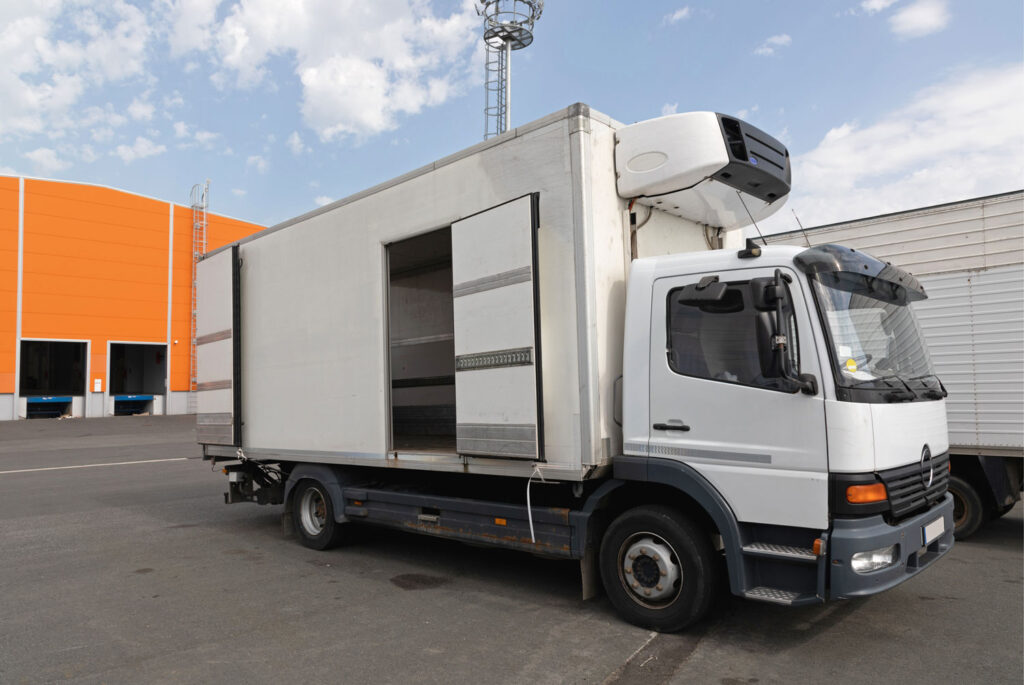
Jean-François Brossard notes that 100% electric solutions are not yet fully mature in this segment. "Electric refrigeration units are not quite there yet. It's strange to drive an electric truck while your refrigeration system still runs on diesel." He also makes a parallel with another vehicle type: "It's a bit like some school buses that are electrified, while their heating system is still diesel." Nevertheless, some Class 5 100% electric refrigerated models (including the refrigeration unit) are coming to Quebec very soon, notably the Rizon.
Six-wheel trucks
The issue of weight remains a concern. "All manufacturers offer six-wheel trucks, but they have the same problem: they are heavy. And the available payload is low — around 10,000 to 12,000 pounds — which limits their profitability," notes Jean-François Brossard of Location Brossard.

Note
For light urban delivery vehicles, the offering is now much more varied, with models ranging from small pickups to vans of different sizes.
Where to look for information
Faced with this diversity of options, it is essential to be well informed to make an informed choice. Here are the main resources at your disposal:
Specialized resources *
- Browse the Zero-Emission Medium- and Heavy-Duty Vehicle Canadian Model Availability Catalogue by Clean Energy Canada
- Explore the fleet electric vehicle database by Electric Autonomy Canada
* Some errors may have slipped into the vehicle specifications presented in the specialized resources. To obtain the most accurate and up-to-date information, always consult the manufacturer's website. For example, the Freightliner eCascadia model does not list the 438 kWh battery option in one of these resources.
Although this fact sheet focuses on medium and heavy trucks, many types of light electric truck models exist on the market, ranging from pickup trucks to vans. To learn more: click here.
A fact sheet dedicated to small urban trucks will be available shortly. Stay tuned!
Direct approaches
- Visit the 'electric' sections of traditional truck manufacturers' websites ;
- Attend industry events ;
- Contact organizations like Propulsion Québec and the Quebec Trucking Association ;
- Talk with other carriers who have made the leap.
The importance of being well informed before choosing
Martin Casaubon, of Les Emballages Carrousel Inc., insists on the need to do thorough research before making a choice.
"We all have a responsibility to see what exists on the market. Once we ask the right questions, we are better equipped to make an informed decision. Three years ago, when we started the project with Jean-François at Location Brossard and his team, options were limited. Today, the offering has diversified. Apart from a few exceptions, I think there are very few bad products."
He adds that some vehicles are better suited to specific uses. "Some models are more technologically advanced and better suited to certain realities. I've heard of batteries that recharge at very high voltage, in a few minutes. This is particularly interesting for those who make multiple trips per day or longer distances and want fast recharging."
How to make your final choice
Questions for manufacturers
Before making your final decision, ask these essential questions to your potential suppliers:
Support and after-sales service

After-sales service plays a crucial role in the user experience.
Jean-François Brossard emphasizes it clearly:
"There is no bad product per se, each has its strengths and weaknesses. As with combustion trucks, you must choose a supplier that offers excellent service; in my opinion, it's fundamental. It's what makes all the difference day to day. There will be repairs, it's inevitable. But beyond the price, it's really the quality of service you're buying, especially when you're still in the learning phase with a new technology."
Martin Casaubon highlights the benefits of working with an established manufacturer.
"Working with a recognized manufacturer offers many advantages. Several parts are already standardized, like a windshield or a mirror, for example. These are components they have in inventory, so we know the costs and they are simpler to replace."
Specific questions about service :
- What is the availability of after-sales service?
- Where are the authorized service centers located?
- What are the lead times for parts delivery?
- What training do you offer our mechanics and staff?
Battery warranties: understanding the options

Warranty conditions can vary considerably from one supplier to another. It is essential to understand them well, particularly regarding batteries.
Jean-François Brossard shares his experience:
"Lithium batteries can be warranted up to 12 years, but that represents an additional cost. On our side, we chose to pay extra to get an extended warranty, so that the vehicle is covered from A to Z for five years."
He nevertheless puts the relevance of very long warranties into perspective:
"A 12-year warranty is very expensive. However, you must keep in mind that we will never keep a vehicle, whether combustion or, even less, electric, that long. It's simply not compatible with the business model of a truck lessor."
Questions about warranties :
- What are the conditions for battery replacement?
- Are there usage restrictions that could void the warranty?
- Do you have real-world performance data from other customers?
- Can we test the vehicle under our operating conditions before buying it?
Financing and support

When switching to electric, it is essential to understand the financing options and the support offered. Leasing programs, technical assistance, warranties: these elements play a key role in facilitating the transition and ensuring successful integration into your operations.
Questions about financing :
- What financing options are available?
- Do you offer leasing programs?
- What technical support do you provide during the transition?
Access to data
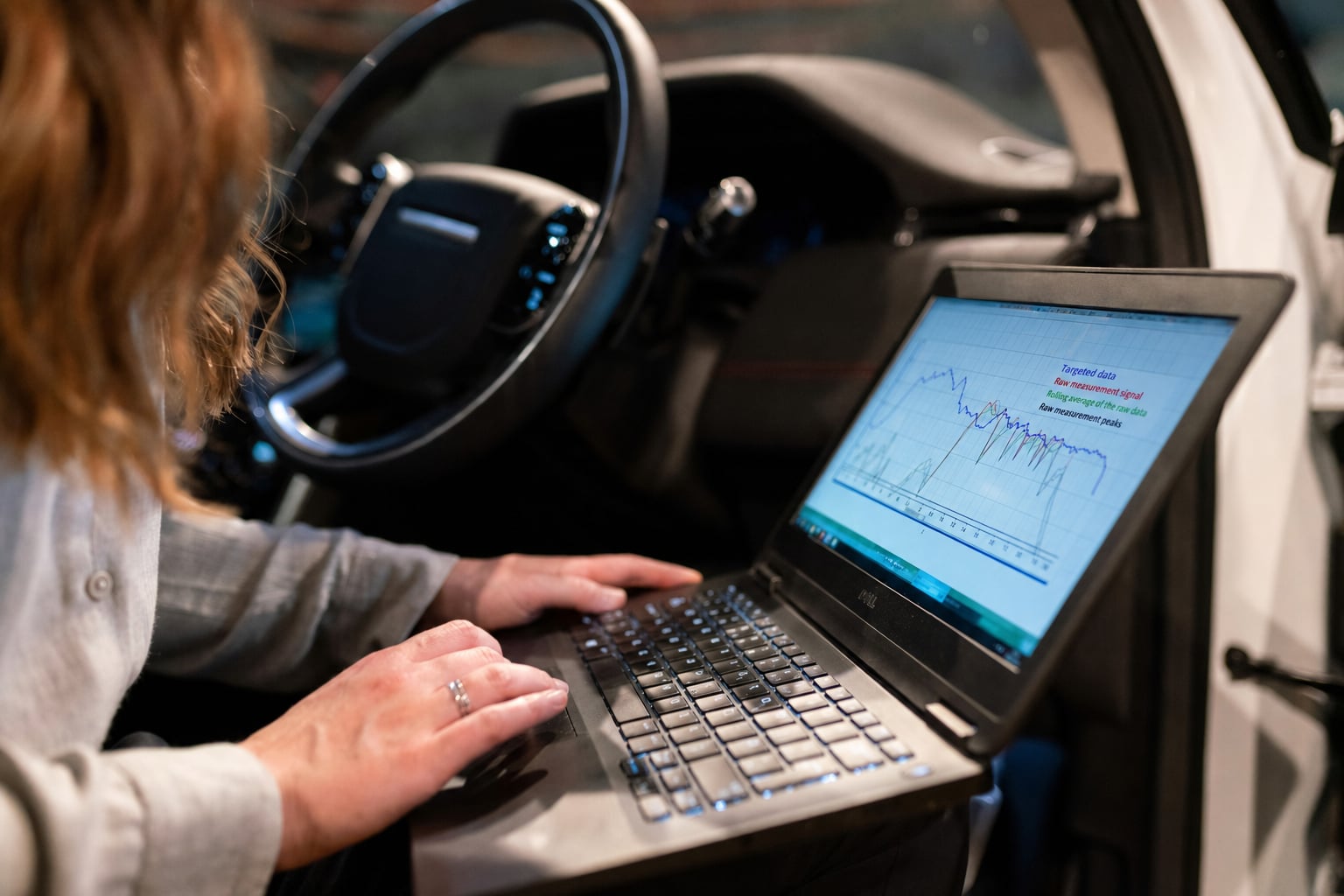
An often overlooked yet essential aspect concerns access to performance data. Martin Casaubon of Les Emballages Carrousel Inc. issues a warning:
"If a manufacturer doesn't allow access to the data, for me it's a no. What we want is to be able to learn, analyze our practices and improve. Without that data, we simply cannot move forward."
Also ensure that your supplier gives you full access to telemetry data. It's a valuable tool to optimize vehicle use and continuously adjust your practices.
Differentiation criteria
Beyond basic performance, certain elements can tip the balance:
Charging speed
Martin Casaubon identifies charging speed as a new differentiation criterion between vehicles. This depends, of course, on charger power but also on the truck's ability to accept a faster or slower charging rate.
"The possibility of faster charging becomes a key element that distinguishes some models from others. In our case, we wanted to use the vehicle for double operations, but since we already use the battery at full capacity during the day, it's almost impossible. We knew it from the start, but with the new options coming to the market, we think we'd like to take advantage of them. The more you can exploit the full capacity of the battery, the more profitable the vehicle becomes."
Field tests
Jean-François Brossard of Location Brossard recommends a field approach:
"You can always do test drives with different manufacturers; they'll be happy to offer them to you. But in the end, the vehicles offer fairly similar performance. The main difference is battery capacity. And above all, what makes all the difference is the service. The real issue is the partnership you establish with your supplier."
Understanding and avoiding common pitfalls
Do not overestimate capabilities when choosing the vehicle
Jean-François Brossard warns against unrealistic expectations.
"You must not believe that an electric truck will be able to perform all the tasks of a combustion vehicle. That's not the case. For example, if you want to stay within the manufacturer's standards and respect the warranty, you cannot transport extremely heavy loads. That kind of load risks overworking the electric motor, which is simply not designed for that."
Managing seasonal conditions
Martin Casaubon notes the significant variations linked to weather conditions.
"My summer reality is completely different from that of winter. There are days when I tell myself: three months ago I did this route without any problem, but today I might not be able to complete the 25 stops. You then have to adapt the planning or reduce the number of deliveries in certain areas."
This is also an important point to consider when choosing the vehicle.
Best practices to preserve the battery
Jean-François Brossard reminds that manufacturers do not impose strict rules, but make important recommendations to maximize battery life.
"They are mainly warnings. Some experts advise, for example, not to consistently charge to 100%, but rather to 85, 90 or 95% to preserve battery efficiency. Similarly, it's better to avoid dropping below 10% charge when using the vehicle."
These habits have a concrete impact on long-term performance.
"This helps slow the natural degradation of the battery. Yes, there will always be a loss of capacity over the years, but it will be much slower if you avoid extremes like a 100% charge or a full discharge."
Buy or lease? Evaluate your options!
The choice between purchase and lease largely depends on your business model and your appetite for technological risk.
Purchase

- Full ownership of the vehicle
- Recovery of residual value

- Significant capital tied up from the start
- Risk of faster technological obsolescence
- Full responsibility for maintenance and repairs
- Provide for an alternative replacement vehicle in case of an electric vehicle breakdown
- Need to develop in-house expertise (garage, qualified personnel) or find partners who can do it
- Less flexibility to adjust the fleet according to evolving needs
- Resale or disposal of the vehicle at the end of useful life (risk of low residual value)
Leasing

- Technological flexibility (avoid obsolescence)
- Maintenance often included with an alternative replacement vehicle in case of electric vehicle breakdown
- Ease of upgrading
- Reduction of financial risks
- Access to the lessor's expertise

- Limited choice to the lessor's brands (some lessors, however, offer all brands)
- Potentially higher long-term costs (carefully study the total cost of ownership including hidden expenses)
- Less control over specifications (for short-term leasing)
Expert testimonials
For Martin Casaubon, of Les Emballages Carrousel Inc., leasing proved to be the ideal solution for his fleet of six electric trucks.
"Purchasing simply isn't part of our business model. I don't have a garage, I don't want to hire mechanics, and I don't have the space for that."
Jean-François Brossard, for his part, explains that this decision fits within a client-driven logic.
"Our main motivation is to serve our customers well. In some cases, they even push us to innovate. We wanted to offer them a solution while minimizing the risk to the customer."
And if no vehicle yet meets your needs?
Even if no model seems perfectly adapted to your current reality, concrete avenues exist. Adapting your operations by changing routes, splitting tours or adjusting schedules according to seasons can allow you to gradually integrate electric vehicles into your fleet. If your research reveals no vehicle that meets your needs, consult fact sheet 3 on adapting operations to assess whether it would be relevant to review certain practices. Furthermore, stay alert to technological advances: new developments arrive quickly and could, within a few months, meet your requirements. Regular monitoring and periodic reassessment of your needs are essential to remain ready to seize the right opportunities.
Final checklist: key points to remember
Before making your choice, make sure you have:
- Precisely assessed your needs : range, payload capacity, charging speed ;
- Checked compatibility : charging stations, software, charging networks ;
- Asked manufacturers on after-sales service, warranties and access to data ;
- Considered the options : purchase or lease according to your business model ;
- Planned training of your drivers and teams ;
- Planned seasonal and operational adaptations needed ;
- Identified your partners for service and technical support.
Conclusion
Choosing an electric truck is not just about comparing datasheets. It is a strategic process that involves understanding your operational needs, assessing the rapid evolution of the market, and surrounding yourself with the right partners.
Technology evolves, options multiply, and the challenges are very real. But one thing is clear: those who start now to test, learn and adapt will be best positioned to take advantage of this transformation.
Start small, stay curious, ask the right questions — and above all, move forward with confidence. It is through experimentation and agility that you will build a more sustainable, more efficient fleet, better adapted to the demands of tomorrow.


