


Electrification of Small Truck Fleets: Inspiring Examples from Quebec Companies
Why talk about small trucks in this guide?
Although this guide is primarily dedicated to electrifying medium- and heavy-duty trucks, the experience of companies that have electrified their small truck fleets also deserves to be highlighted. These concrete examples show that the electric transition is already underway in Quebec, including for the smallest vehicle categories, and that it can serve as a strategic entry point toward broader electrification.
The electrification of small truck fleets is no longer just a vision of the future: it is already a field reality for several Quebec companies. These pioneers demonstrate that the shift to electric is not only accessible, but also effective and strategic. Through their concrete experiences, they prove that electrification can be successfully integrated into varied operations, notably delivery, while generating tangible benefits for drivers, companies and the environment.
In this fact sheet, three organizations with very different business models—Van Houtte Coffee Services, Lufa Farms and Intelcom | Dragonfly—share their journeys, their lessons learned and the levers that make their electrification accessible and high-performing. Their inspiring examples show that, regardless of fleet size or management model, there is a realistic path to electric transport.

Clara Lemieux-Bluteau
Coordinatrice logistique, Les Fermes Lufa

Damir Mulazimovic
Gestionnaire logistique, Les Fermes Lufa

Frédéric Bel
Directeur des programmes de décarbonation, Intelcom | Dragonfly

Kevin Rouleau-Thiboutot
Directeur des opérations du parc de véhicules, Les Services de café Van Houtte
Van Houtte Coffee Services: progressive electrification turned into corporate strategy
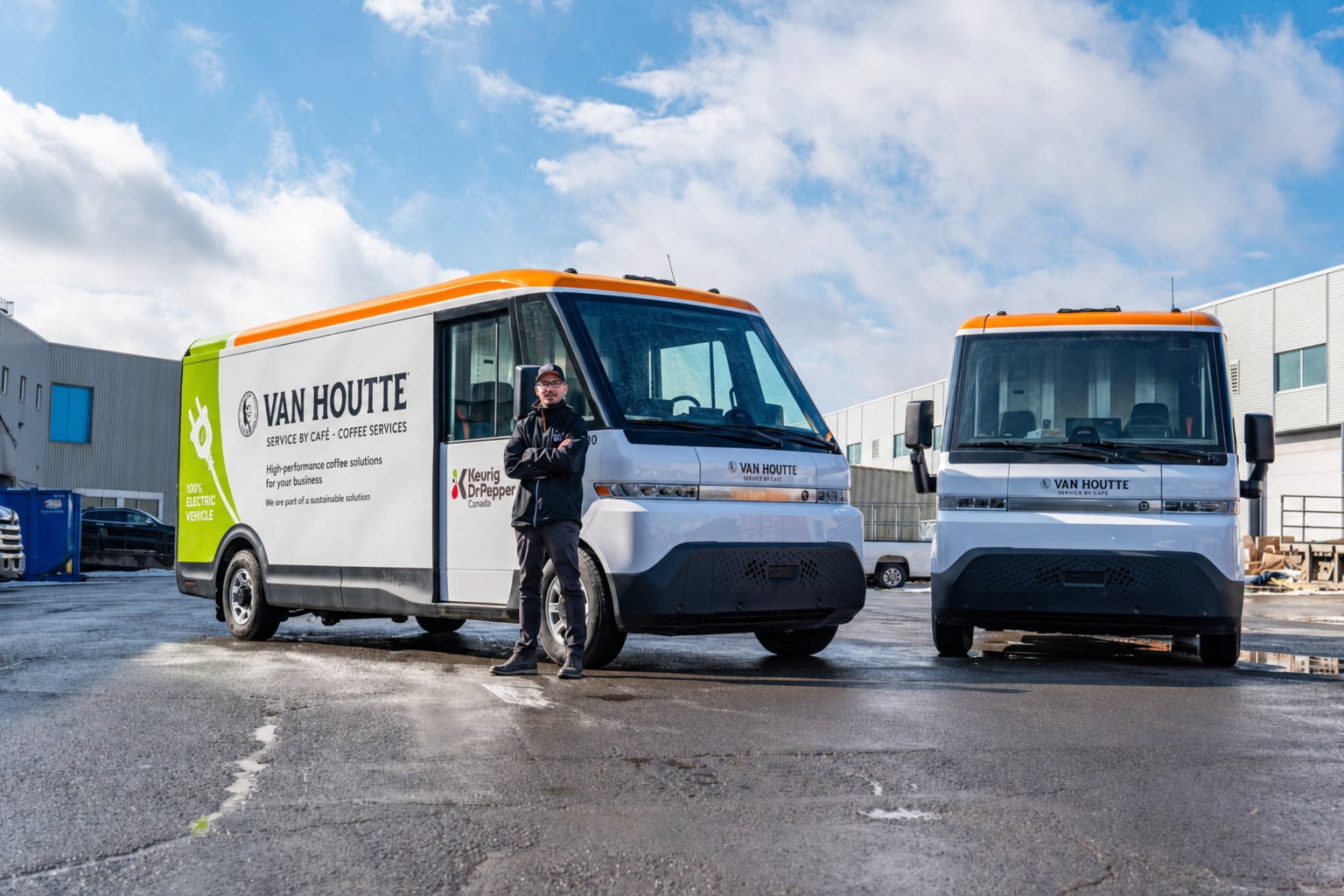
Electrification serving delivery
Electrification of the fleet at Van Houtte Coffee Services began at the end of 2022 as part of their commitment to reduce environmental impact. "We established a clear plan by making alliances with different partners," explains Kevin Rouleau-Thiboutot, fleet operations director. "A dealer from the Atlantic called us to offer their very first Ford Transit electric. We seized the opportunity."
This first step marked the start of a more structured transition. Present in large urban centers as well as in more remote regions, Van Houtte Coffee Services has to deal with varied logistical realities due to its 30 branches spread from St. John to Vancouver Island.
Despite the added complexity in its operations structure, the organization set a clear goal: electrify 25% of its fleet by the end of 2025. With 55 electric vehicles already in service, or 23% of the total, the target is within reach and forecasts make the achievement of this goal seem very optimistic.
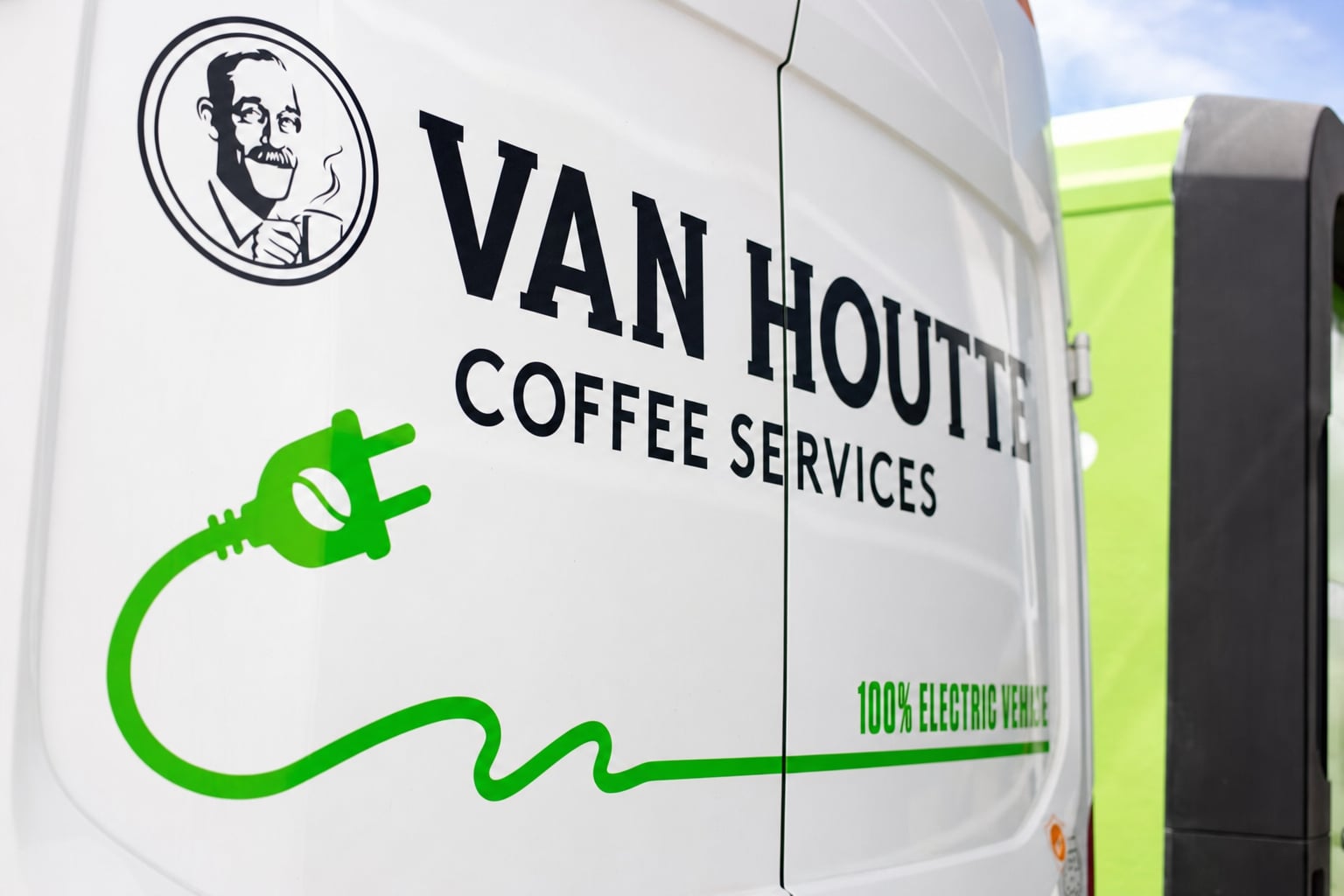
Electrification adapted to on-the-ground realities
Van Houtte Coffee Services’ electrification strategy is based on a targeted, evolving approach. The 55 electric vehicles in service, mainly Ford E-Transits, are for the most part deployed in large urban centers. Over the past year and a half, the addition of the Chevrolet BrightDrop, which offers greater range than the Ford Transit, has allowed coverage to be extended to some more rural areas.
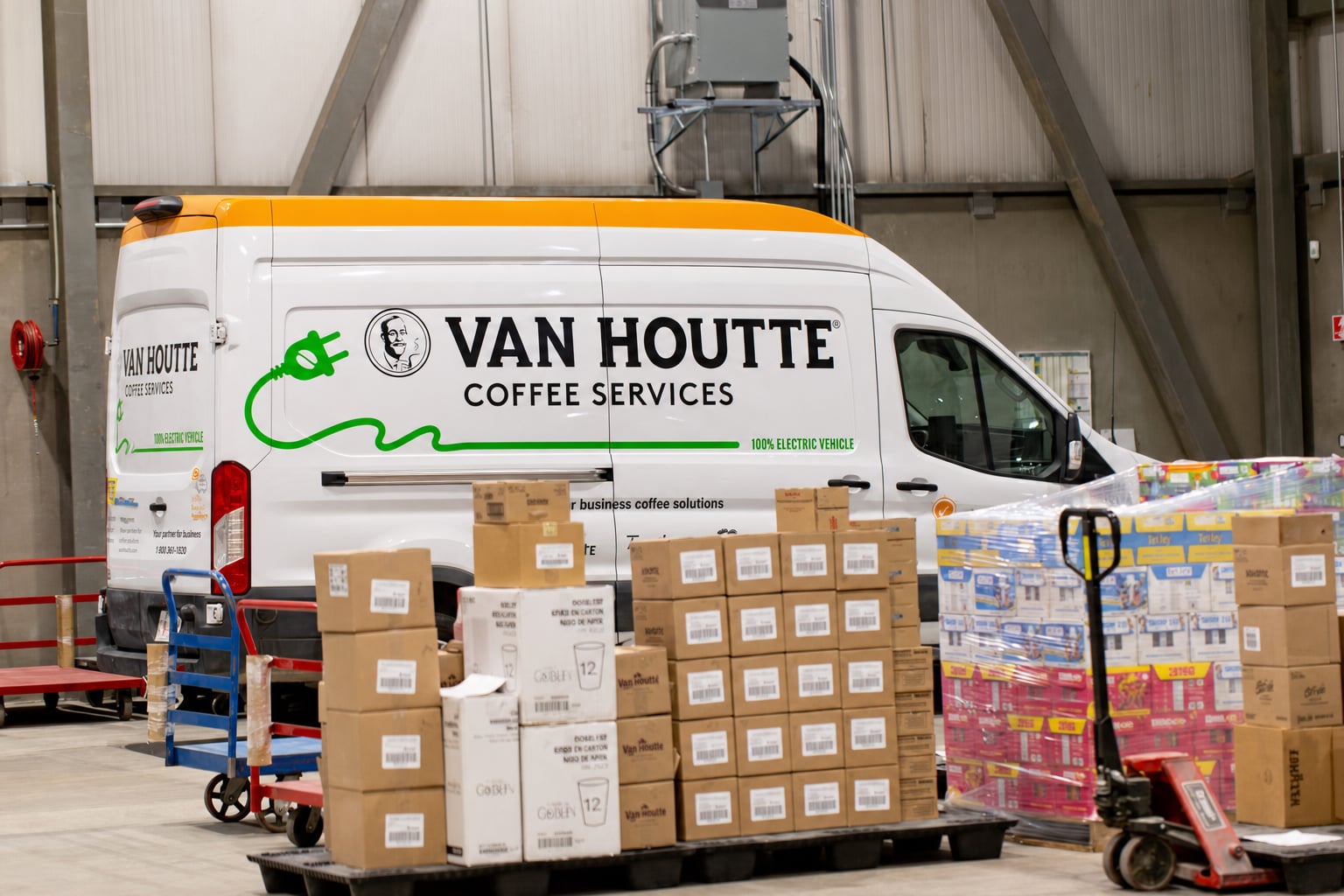
This shift requires rigorous planning: assessing mobility needs, setting up appropriate charging, training teams and managing change. Despite everything, fleet electrification has asserted itself as a concrete and promising solution, both economically and environmentally.
Operations designed to facilitate electrification
At Van Houtte Coffee Services, the fleet is used for two types of operations: product delivery and technical services. "It’s mainly the delivery side that we electrify," explains Kevin Rouleau-Thiboutot. The company focuses its electrification on delivery trucks because they make short, frequent urban trips—ideal for electric vehicles. Economically, this transition is strategic: maintenance and fuel costs decrease in the long run. In addition, overnight charging directly at company facilities allows drivers to start each morning with a full battery, ensuring smooth and efficient daily operations.
A gradual but convincing adoption among drivers
The transition to electric vehicles elicited varied reactions among drivers, ranging from enthusiasm to some caution. "Some were curious and open to experimentation, while others were more reserved," recalls Kevin Rouleau-Thiboutot. But once on the road, the advantages quickly proved themselves. Today, those who use an electric vehicle no longer want to go back. More comfort, fewer vibrations, and concrete time savings—like eliminating stops at the gas station—are now part of everyday life.
The Intelcom model: supporting electrification at scale
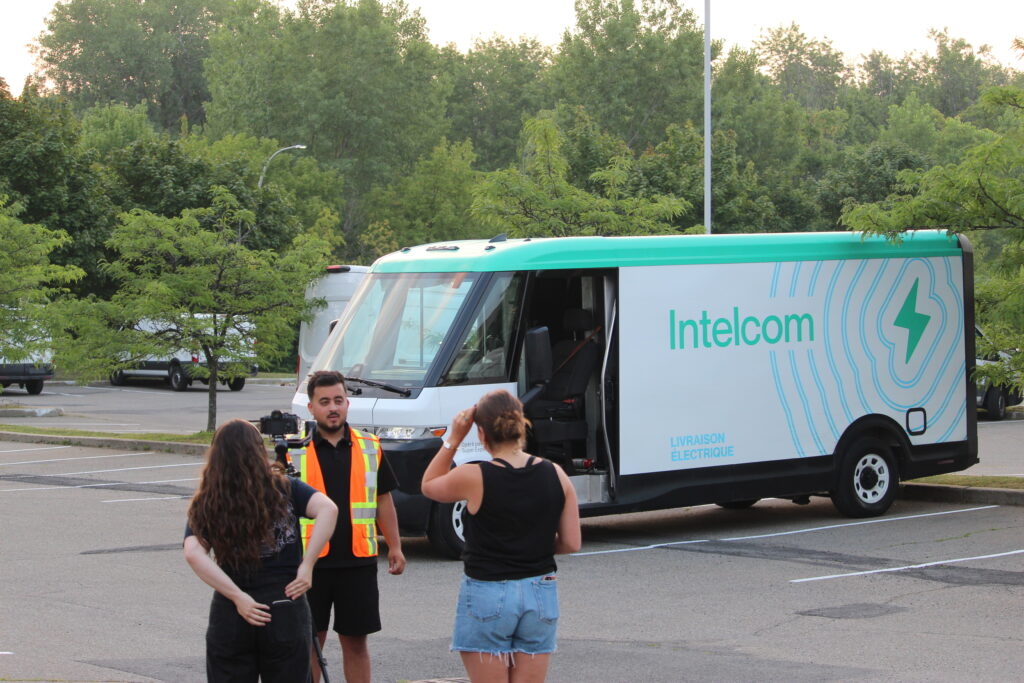
An aggregator role, not an owner
Intelcom | Dragonfly adopts a unique approach in Quebec’s electrification landscape. "We are one of the largest last-mile delivery operators in Canada," explains Frédéric Bel, director of decarbonization programs. The company does not own trucks nor employ drivers: it acts rather as an aggregator of independent carriers, who own their vehicles and manage their workforce.
This structure does not prevent Intelcom | Dragonfly from actively engaging in the energy transition. A signer of the Climate Pledge in 2021, the company set a goal of reaching carbon neutrality by 2040.
Targeted support for its partners
Rather than imposing obligations, Intelcom | Dragonfly favors a support approach.
"The majority of our partners want to switch to electric, but don’t know where to start," notes Frédéric Bel. The challenges are multiple: financing, vehicle and charger choices, installation, maintenance, software.
To support them, Intelcom | Dragonfly develops partnerships with vehicle manufacturers, charger installers, and offers practical programs to facilitate the transition.
Concrete and advantageous incentives
The company also offers very concrete incentives. "If a carrier adopts electric, we can assign them better routes, denser in deliveries," explains Frédéric Bel. In some stations, electric vehicles even receive VIP treatment: a dedicated warehouse, optimized operating conditions. "It’s motivating and it makes a real difference."
Lufa Farms: electrification driven by collaboration

A green vision that guides every decision
At Lufa Farms, electrification is entirely based on a collaboration model with subcontractors—an approach aligned with the company’s core values. "We started this transition a very long time ago," emphasizes Damir Mulazimovic, logistics manager. Long before popular models like the e-Transit or the BrightDrop hit the market, Lufa was already using passenger-type electric vehicles towing trailers for its deliveries.

This innovative approach fits within a clear company vision: "We are a green company. Our goal is to reduce GHGs wherever possible, limit pollution and act as a responsible corporate citizen." Guided by this philosophy, Lufa set an ambitious target: deliver 60% of its orders using electric vehicles by the end of 2025.
Long-term collaboration, key to success
Lufa’s deliveries are carried out exclusively by subcontractors, except for one BrightDrop vehicle used by the marketing team to transport their operations’ equipment. This model relies on lasting relationships: "We have worked with our subcontractors for a very long time. We seek to support them in their growth."
Transparency and communication are at the heart of this collaboration.
"From the start, they knew electrification was part of our vision. It’s not a surprise." Regular dialogue allows monitoring operational evolution: road conditions, driver feedback, challenges encountered, etc.
Aware of the investments required, the company adapts its pace: "We know it demands a financial effort from our partners. That’s why we are committed to supporting them and moving at a pace that suits them," estimates Damir Mulazimovic.
The tangible benefits of electrification
A revitalized work environment
One of the most tangible advantages of electrification concerns driver comfort. Damir Mulazimovic at Lufa Farms sums it up well:
"The driver spends 8 to 10 hours a day in their truck. It’s their office. Would you prefer an old 1980s office with an obsolete computer, or a modern, well-equipped space? It’s the same for a truck!"
Electric vehicles significantly improve the daily experience: smoother driving, fewer vibrations, no noise, and no need to detour to the gas station. As a result, drivers find real gains in comfort and pride, which fosters engagement.
An immediate environmental impact
Each electric truck put into service eliminates GHG emissions and helps reduce noise pollution in the neighborhoods served. For companies that deliver to hundreds of customers every day, the cumulative effect quickly becomes significant and visible.
Long-term cost savings
For Frédéric Bel, director of decarbonization programs at Intelcom | Dragonfly, electrification is first and foremost a sound economic decision. Thanks to federal and provincial subsidies, the acquisition cost of an electric vehicle becomes comparable to that of a gasoline model. In use, the gains are even more significant: fuel savings of $60 to $80 per day, less maintenance, and increased reliability. In addition, drivers appreciate the comfort, quiet and reduced vibrations, which improves their work experience. For companies, the transition thus becomes profitable, strategic and rewarding.
In addition to human and environmental benefits, electrification also reduces certain operational expenses, such as energy and maintenance, which improves profitability. (See the section The economic equation: increasingly favorable further down in the fact sheet.)
Sometimes unexpected operational benefits
At Van Houtte Coffee Services, electrification made it possible to introduce vehicle preconditioning in winter. Thanks to overnight charging and telemetry, the cabin can be heated before departure, the windows defrosted and range preserved, because the energy comes from the grid rather than the vehicle battery. This simple adjustment improves both comfort and performance.
Current challenges and limitations
Geographical and technological constraints
Despite progress, some areas remain difficult to cover. For example, at Lufa Farms, deliveries to the city of Quebec still exceed current range capabilities. Conversely, their electric trucks handle the vast majority of routes in the Montreal metropolitan area without problem and can even reach Ottawa while returning with a well-charged battery. For Van Houtte Coffee Services, pan-Canadian coverage also implies certain limits, such as payload capacity or the lack of service centers for some models. However, their urban and regional routes, notably in Greater Montreal, are already well suited to electric vehicles, which complete their daily runs with comfortable range.
A winter that puts the technology to the test
Quebec’s climate remains a challenge. Range drops in winter, forcing companies to adjust their practices. "It’s not perfect, but we adapt," summarizes Frédéric Bel of Intelcom | Dragonfly. Preconditioning becomes essential to limit these impacts.
Changing mindsets takes time
Frédéric Bel of Intelcom | Dragonfly identifies three major barriers to electrifying small truck fleets: perceived cost, lack of knowledge about the technology, and inertia tied to entrenched habits. Moving from a combustion vehicle to a connected, intelligent electric vehicle implies a paradigm shift and an increased need for training and support.
The economic equation: increasingly favorable
Concrete savings
Van Houtte Coffee Services note immediate reductions in fuel and maintenance. Fewer garage visits, no oil changes, and vehicles more available on the road. Result: increased efficiency without interruption.
Purchase costs greatly offset by subsidies
According to Frédéric Bel of Intelcom | Dragonfly, a BrightDrop vehicle initially costing $140,000 can come down to around $70,000 after federal and provincial subsidies, comparable to the price of a gasoline vehicle of the same size.
"For that price, you get a high-performing electric vehicle, produced in Canada, with long range and all-wheel drive."
Daily operating savings
For a 200 km trip, an electric vehicle uses about $15 to $20 of electricity compared with up to $100 of gasoline.
"It’s a daily saving of $60 to $80 per truck," estimates Frédéric Bel. "In Quebec, it’s a logical choice!"
Carbon credits: a lever often underestimated
At Van Houtte Coffee Services, data from chargers can be used to generate carbon credits that are then sold, reducing operating costs. As for Lufa Farms, they see it as a "happy accident" that enhances the economic equation without extra effort.
Meeting the charging challenge
Solutions adapted to each reality
Lack of access to chargers is often cited as an obstacle. Intelcom | Dragonfly addresses this with a diversified strategy: installation in its own warehouses, at partners’ sites, and partnerships with private or public operators to offer favorable rates. Shared charging stations could also be developed.
Tips for a successful transition
- Don’t hesitate—get started. Don’t wait for the technology to advance further to increase ranges; begin with what is possible today.
- Go gradually. Replace one vehicle at a time, test, learn and adjust.
- Rely on preconditioning. Especially in winter, it improves range and comfort.
- Customize your strategy. Adapt vehicle and charger choices according to real needs (range, type of routes, frequency of use).
- Accept that technology evolves. As Damir Mulazimovic, logistics manager at Lufa Farms, points out: "We adjust our ambitions as technology becomes available."
An accessible transition already underway
The examples of Van Houtte Coffee Services, Lufa Farms and Intelcom | Dragonfly demonstrate that electrifying small truck fleets is not only possible, but already well rooted in operational reality in Quebec. By moving forward with method, transparency and realism, the shift to electric is accessible and beneficial. The advantages go far beyond the environmental realm: they affect employee comfort, operational performance and, above all, profitability.
En somme, l’électrification n’est plus un pari : c’est une opportunité. Une transformation durable qui, bien accompagnée, donne aux entreprises un pas d’avance dans le transport de demain.


