


How to plan the electrification of your fleet of trucks?
The transition to electric truck fleets represents a major but unavoidable strategic challenge to reduce the environmental impact of the freight transport sector and comply with new sustainable development requirements. Electric trucks form anecosystem more complex than a diesel vehicle, their operation being intrinsically linked to their energy supply. Equal attention must be paid to vehicle selection, the installation of charging equipment, the adaptation of existing infrastructure, the implementation of digital management solutions, and the training of mechanics, technicians and drivers.
In this fact sheet, three industry experts will provide testimony:

Jean-François Brossard
Directeur des technologies et innovations énergétiques, Location Brossard

Kevin Lambert
Directeur des équipements et garanties, Groupe Robert

Yves Maurais
Directeur, Dossiers techniques et opérationnels, Association du Camionnage du Québec
The holistic approach as a success factor for an electrification plan
Electrifying a truck fleet goes far beyond simply replacing vehicles. To succeed in this transition, it is imperative to adopt a comprehensive vision that integrates every component, from energy management to equipment maintenance.
As emphasized by Kevin Lambert, Head of Equipment and Warranties at Groupe Robert,
"It is essential not to focus solely on the vehicles, but also to integrate the infrastructure that will support them, including charging systems and equipment, maintenance and electric demand management."
Adopting electric trucks implies a fundamental change of approach: beyond the vehicle itself, an integrated system must be designed that encompasses all ancillary structures essential for its power supply, maintenance and supervision. These three dimensions are inseparable and must be developed simultaneously to ensure the success of an electrification initiative.
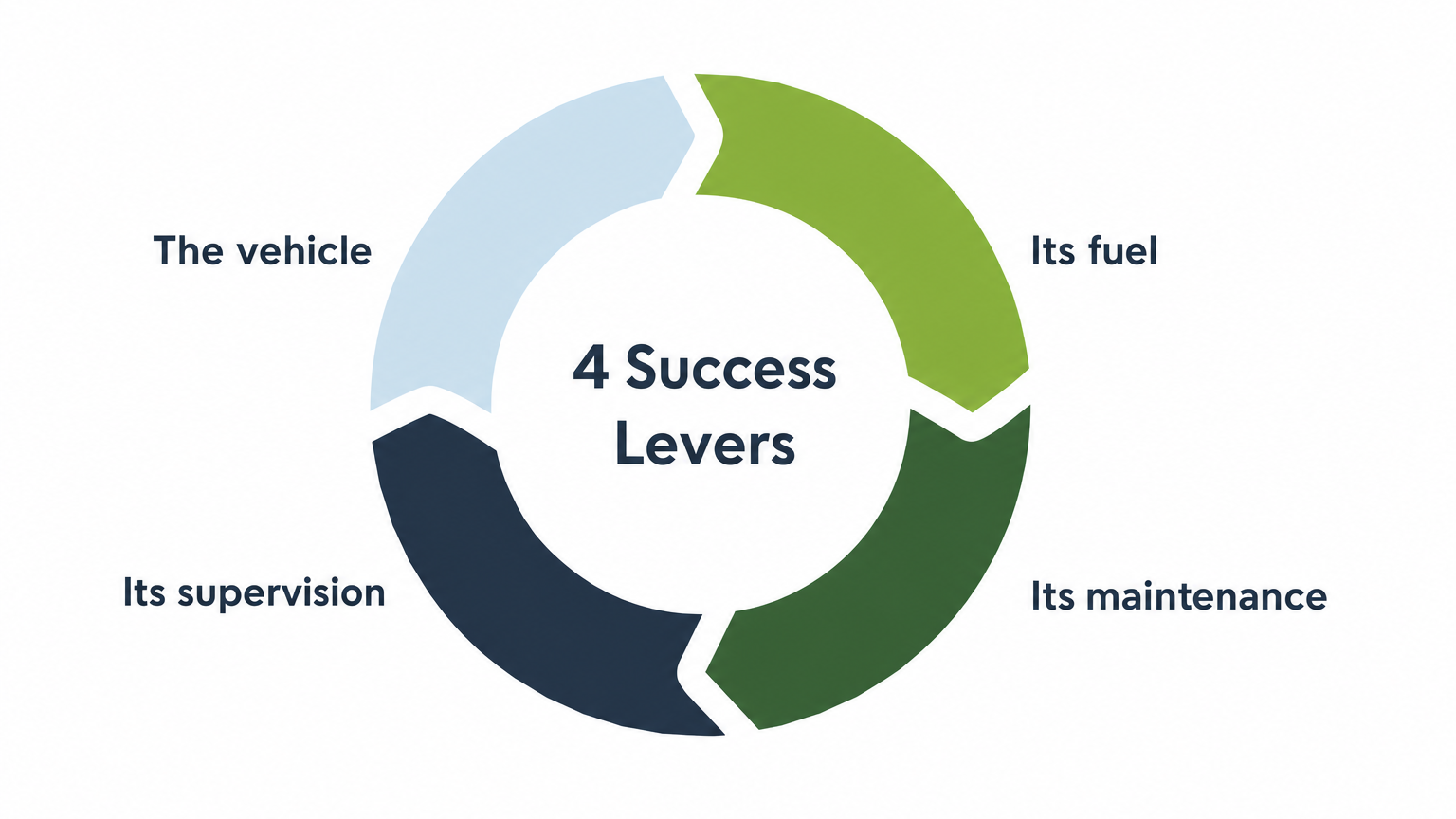
Selected vehicles must meet the endurance, reliability and performance criteria necessary to carry out the planned routes in all environmental conditions, whether seasonal variations or the topographical characteristics of the routes.
"Batteries lose efficiency year after year — about 1 to 2% of capacity per year. After 5 years, this degradation can have a real impact on range and operations planning, especially in winter."states Jean-François Brossard, Director, Energy Technologies and Innovations, Location Brossard Inc.
At the same time, facilities and parking areas must be adapted to accommodate these vehicles, which require more space for their charging stations and specific arrangements related to high-power electrical systems.
As for charging devices, they must be able to power the trucks while taking into account time constraints, whether during overnight idle periods, driver rest intervals, or during loading operations. This equipment must be configured to operate both in depots and along routes. Charging systems should be neither too powerful, in order to control capital expenditure and respect the limits of existing electrical installations, nor too slow, to ensure sufficient charging that allows vehicles to complete their planned journeys. Jean‑François Brossard of Location Brossard emphasizes:
"Energy management is a key success factor. Charging slowly during long periods of inactivity allows for a significant reduction in electricity costs."
Regulating electricity consumption peaks also proves decisive in reducing energy costs. The integration of digital platforms for intelligent charge management will offer operators immediate visibility into each vehicle's state of charge, alerts in case of anomalies and, above all, tools to optimize electricity consumption in order to minimize energy bills. Jean‑François Brossard adds:
"Not all management software is compatible with all chargers. You must ensure interoperability and choose a system that allows proper power management between chargers."
"A major issue is the availability of critical parts: a simple breakdown can immobilize a vehicle for a long time if the dealer does not have the parts in stock. It is also necessary to plan clear agreements on maintenance and response times," adds Jean‑François Brossard of Location Brossard. "Battery warranties vary greatly depending on the manufacturer and the conditions negotiated. It is important to fully understand the limits of these warranties and the operational implications associated with them."
An electrification plan succeeds when vehicles, charging stations and infrastructures are designed as a coherent whole. This approach requires long-term strategic planning, both to meet immediate needs and to anticipate future adaptations related to technological developments and changes in vehicle use.
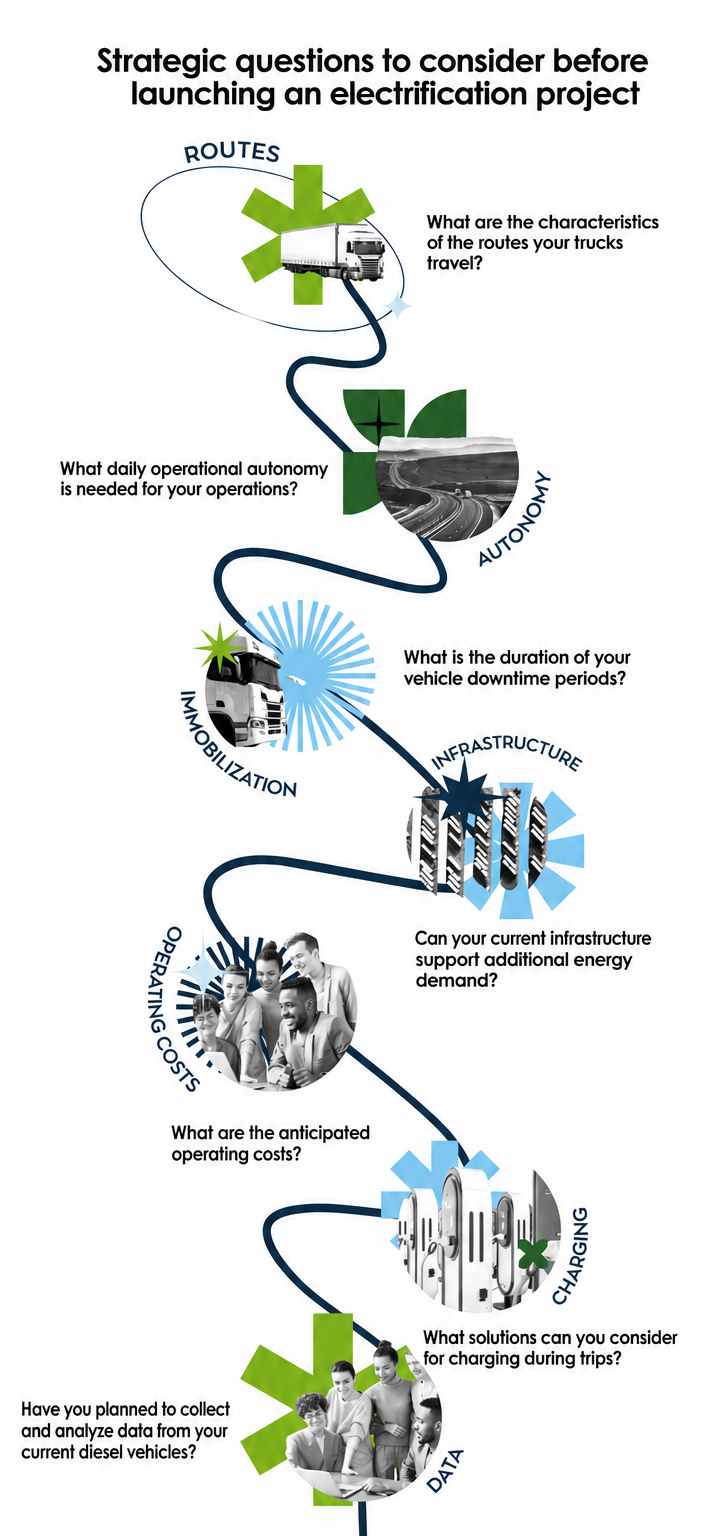
Strategic preliminary questions to ask when launching an electrification project
To successfully carry out an electrification plan for your fleet, it is essential to precisely clarify your expectations and the specificities of your activity. Here are the fundamental questions to explore before embarking on this transformation.
What are the characteristics of the routes traveled by your trucks?
To successfully carry out an electrification plan for your fleet, it is essential to precisely clarify your expectations and the specificities of your activity. Here are the fundamental questions to explore before embarking on this transformation.
What daily range is required for your operations?
It is crucial to precisely assess the daily mileage of each vehicle to properly size the batteries. These requirements will vary according to the nature of the trips (short or long) and the weight of the loads carried.
What is the duration of your vehicles' idle periods?
Specifically, is it possible to include extended pauses for overnight charging or during truck downtime? This information will guide the choice of charging solutions and the organization of parking times.
Can your current infrastructure support the additional energy demand?
Modernizing your electrical network, particularly managing periods of high consumption and adapting charging equipment, is fundamental. Check that your electrical installations can meet the energy needs of the new vehicles. "Even before ordering the vehicles, you must have a clear plan for installing chargers. Connection times can be up to two years, and without chargers, no truck can be operational," estimates Jean‑François Brossard of Location Brossard.
What operating costs are anticipated?
Expenses are not limited to acquiring vehicles. It is essential to anticipate the costs of electricity, maintenance, staff training, insurance and charging equipment.
What solutions should be considered for charging during trips?
If your vehicles travel long distances without the possibility of charging nearby, installing chargers along routes or at customers' sites will be essential. To reduce costs, these chargers can be pooled and shared with other companies, whether competitors or not.
Have you planned for the collection and analysis of data from your current diesel vehicles?
This preliminary approach is significant because it may require considerable time. Nevertheless, it is essential to correctly assess the energy needs and performance of existing vehicles before undertaking their electrification.
Implementation methodology to transform your fleet to electric
Here are the main phases to follow to effectively prepare the transition to electrification.
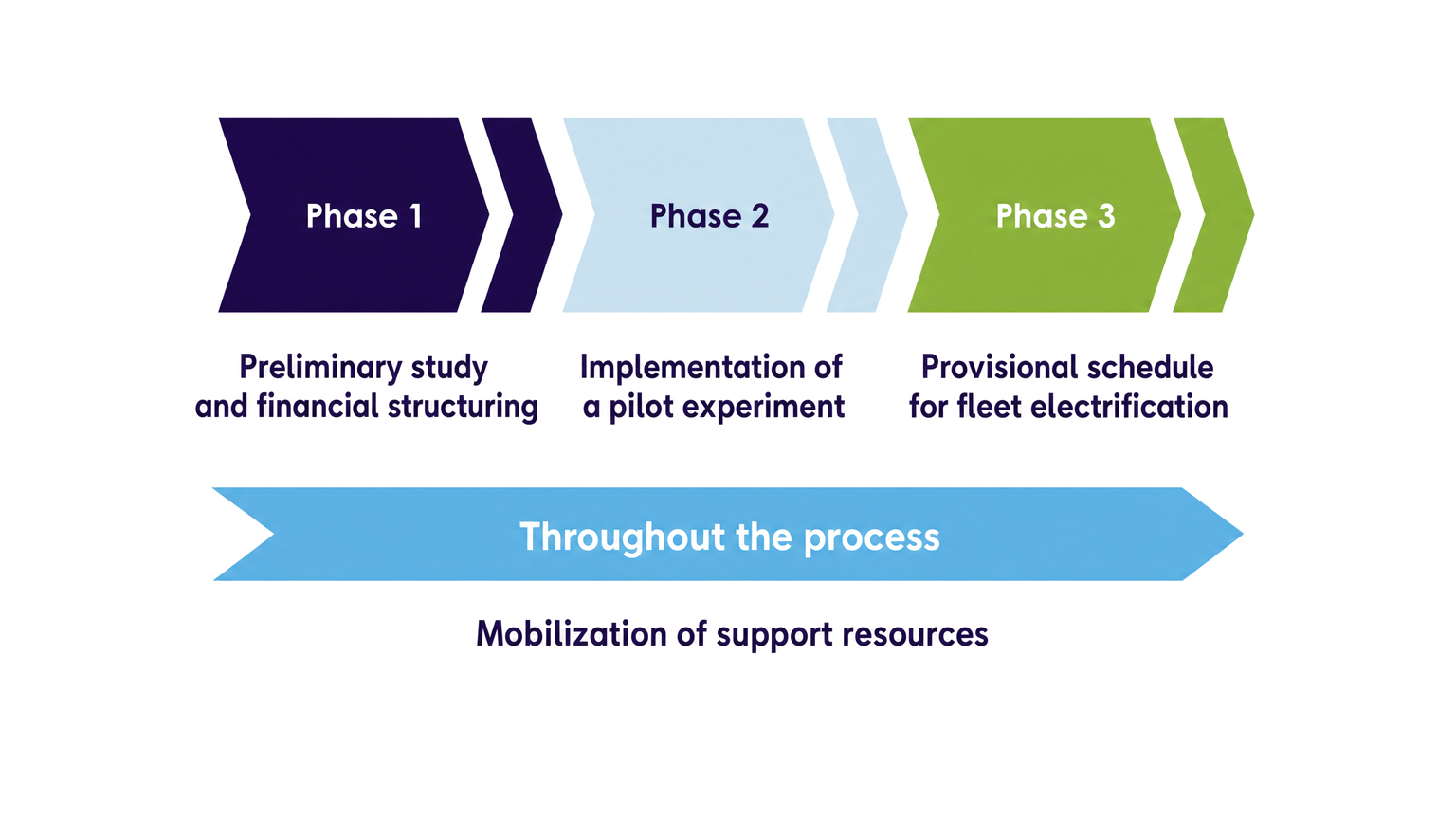
Phase 1: preparatory study and financial structuring
Whether diesel or electric, a truck is the main investment for a transport company. Before selecting a model, it is essential to precisely identify operational needs. And before investing in an electric vehicle, the missions it will be assigned should be analyzed thoroughly, notably:
- Daily distance traveled ;
- Frequency of departures (morning, daytime, nighttime) and the duration of stops at the depot or at clients allowing for charging ;
- Nature of trips (urban deliveries, regional or long-distance) ;
- Type of roads taken (urban area, highway, rural, suburban, paved or gravel surfaces) ;
- Terrain configuration (flat, elevation changes, hilly regions) ;
- Capacity of electrical installations to absorb the additional demand.
Vehicle models and charging strategies can thus be determined based on these specific requirements. For optimal preparation, it is wise to know precisely the operating costs of the diesel vehicles that will be replaced. This comparative analysis will facilitate the assessment of future expenses related to acquiring electric trucks and their comparison with diesel trucks. Do not hesitate to discuss with clients: if electric scenarios are more expensive than diesel scenarios, many clients are willing to pay the cost difference and want to reduce their carbon footprint. It is also relevant to know that some software allows modeling and simulation of your operations using specialized tools that automatically calculate the optimal charging strategy based on telematics data and facilitate decision-making.
The preparatory study phase also makes it possible to develop the project's financial structure and identify the different financing options. The main categories of expenses to anticipate are the following:
- Operating expenses (OPEX): electricity bills (tariff per kWh, power costs, administrative fees), routine and major maintenance expenses (labor and components), maintenance of charging equipment, subscriptions to software and real-time data services, staff training, insurance, etc.
- Investments (CAPEX): vehicle acquisition including warranties and service contracts, charging equipment, connection to the power grid, remodeling of buildings, installation of new electrical distribution systems, modernization of maintenance tools and IT equipment, battery replacement, etc.
Yves Maurais of the Quebec Trucking Association believes that:
"Quebec carriers are sensitive to their carbon footprint, but must juggle tight margins and significant investments. Government support therefore remains essential to enable experimentation and the adoption of heavy electric vehicles"
It is also during this stage that adaptation work on existing infrastructure must be planned and technical plans for electrical installations developed. The use of specialized consultants is strongly recommended to support the entire planning process. It is also recommended to think long-term in this planning so that the work allows the addition of extra charging stations in the future without having to modify the building's electrical infrastructure again.
Phase 2: implementation of a pilot project
For fleet managers with more than ten vehicles, a gradual approach is recommended, beginning with the acquisition of a single electric truck. This strategy will allow the company to adapt gradually to the specificities of electric vehicles and will facilitate the later integration of additional units. For those who have an even larger number, a pilot project replacing 10% to 15% of the fleet with electric trucks may be feasible if operational conditions allow.
To maximize the lessons learned from a pilot project, it should be designed taking into account the same parameters identified for the full deployment of the electric fleet and its associated infrastructure. This coherent approach will allow evaluation of the entire system and adjustment of the strategy before a larger-scale conversion.
Phase 3: provisional timeline for fleet electrification
The pace of transition to an electric fleet varies according to the size of the vehicle fleet and the complexity of the required modifications. As a guideline, here is a general schedule for an electrification project, adaptable according to the particularities of each situation.
Planning your electrification project is the basis of a successful transition. At this stage, you must first put on paper your short-, medium- and long-term vision. How many electric trucks should be purchased each year? What are my daily range requirements? What will my future electricity needs be? These questions make it possible to set up the framework of the electrification plan.
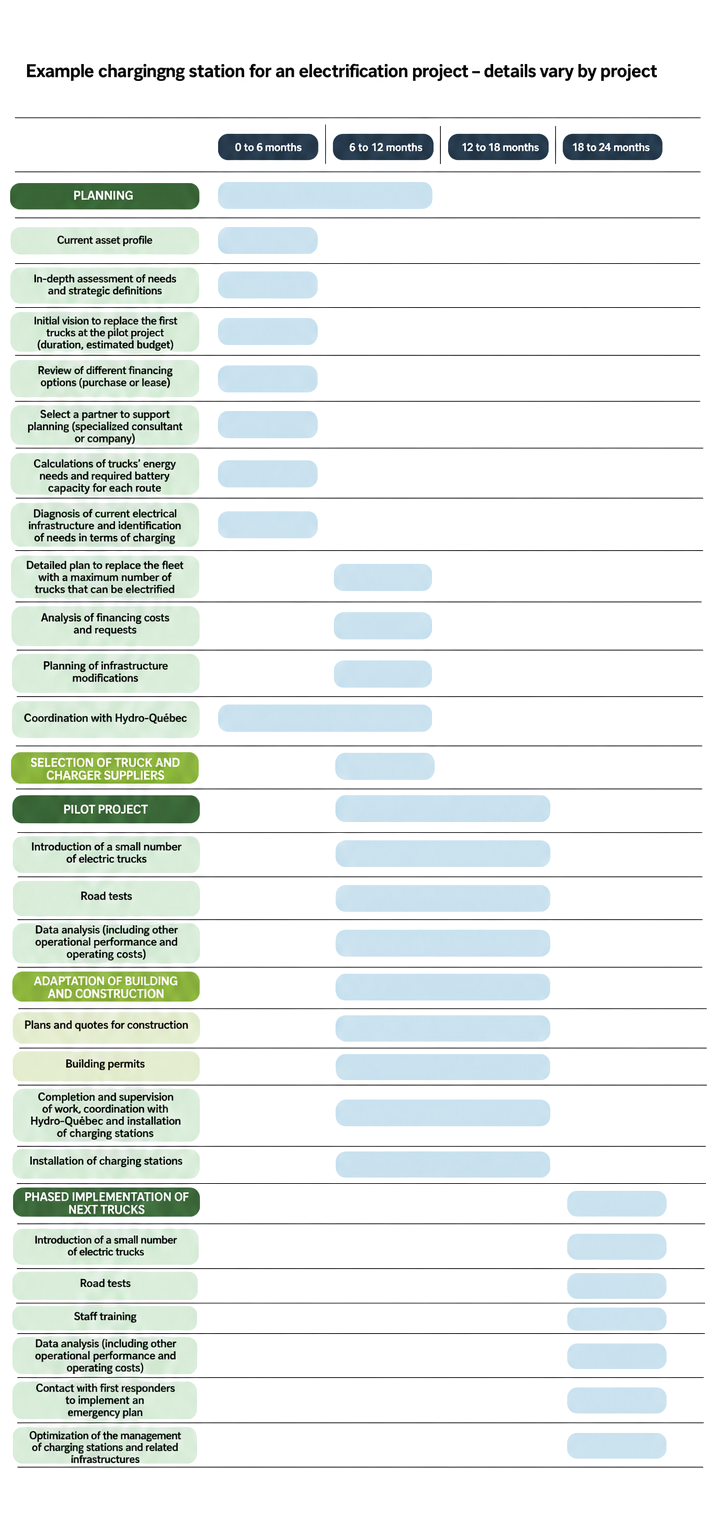
Throughout the process: Mobilization of support resources for your electrification project
Transforming your fleet requires the involvement of multiple specialists: engineers for infrastructure, energy transition consultants and electric vehicle suppliers. Specialized companies such asCléo, 7Gen or engineering firms can support you in designing infrastructures and selecting vehicles. Organizations such as Propulsion Québec can also guide you toward best practices to succeed in this transition.
It is strongly recommended to:
- Engage experts to carry out an energy audit and modernize your infrastructure
- Consult charging specialists to optimize the use of chargers and energy management
In conclusion
Electrifying your truck fleet is a major strategic project that requires a rigorous methodology. By harmoniously integrating all aspects of the electrification plan, from vehicles to the management of charging systems, you will be able to carry out this transition while limiting operational risks and maximizing long-term economic benefits.
For further information, particularly on logistical aspects, a third fact sheet specifically addressing the impacts on the organization of transport operations is being prepared.


