


What charging infrastructure should be put in place?
Adding charging stations is not limited to "plugging in trucks": it is a strategic pillar to consider from the very start of planning. This fact sheet guides you through the basic concepts to choose your charging stations and optimize your electrical infrastructure.

Jean-François Brossard
Directeur des technologies et innovations énergétiques, Location Brossard

Martin Casaubon
Vice-président Opérations, Les Emballages Carrousel

Mélanie Camara
Directrice environnement et développement durable, GLS Canada
Why charging infrastructure is crucial in electrifying a truck fleet
Charging infrastructure is much more than a simple piece of technical equipment. It is a central strategic element that directly influences the success of your electric transition. Acquisition, installation and operating costs for chargers can represent a significant portion of the total investment, and charging needs vary considerably depending on the site, fleet size and operating hours.
Purchasing and installing a charger requires planning, permits and sometimes significant site work. It is not an instant step, and as with vehicle choice, the type of charger depends on your real usage: required range, trip frequency, available downtime. A global view allows you to properly size your infrastructure from the start so you can grow your electric truck fleet without starting from scratch or blowing up costs.
It is important to correctly size charger capacity to avoid oversizing and limit unnecessary operating costs. It is also possible to generate revenue with chargers, for example by generating carbon credits, or by sharing chargers with other users or partners. Some chargers also allow energy to be fed back to the grid (V2G), which could soon represent an additional source of revenue for their owner.
Installing a charger involves coordinating multiple parties: manufacturer, energy supplier, master electrician, grid operator, fleet operations manager, provider of smart charging digital solutions. Being well supported in this process can make all the difference between a successful project and costly complications.
Understanding the concepts of energy, consumption and power[1]
In an electric vehicle, the energy required for movement is stored in a battery rather than in a gas tank. This fundamental difference requires becoming familiar with new units of measurement.
The energy stored in a battery is measured in kilowatt-hours (kWh), representing the "reserve" of energy available, somewhat like litres of gasoline in a tank. An electric vehicle's energy consumption is generally expressed in kWh/100 km, the equivalent of L/100 km for internal combustion vehicles. Power indicates the rate at which energy is transferred to the battery and is expressed in kilowatts (kW). You can compare it to the flow rate of a gas pump: the higher the flow, the faster the charging.
To calculate your needs, you can use this handy formula:
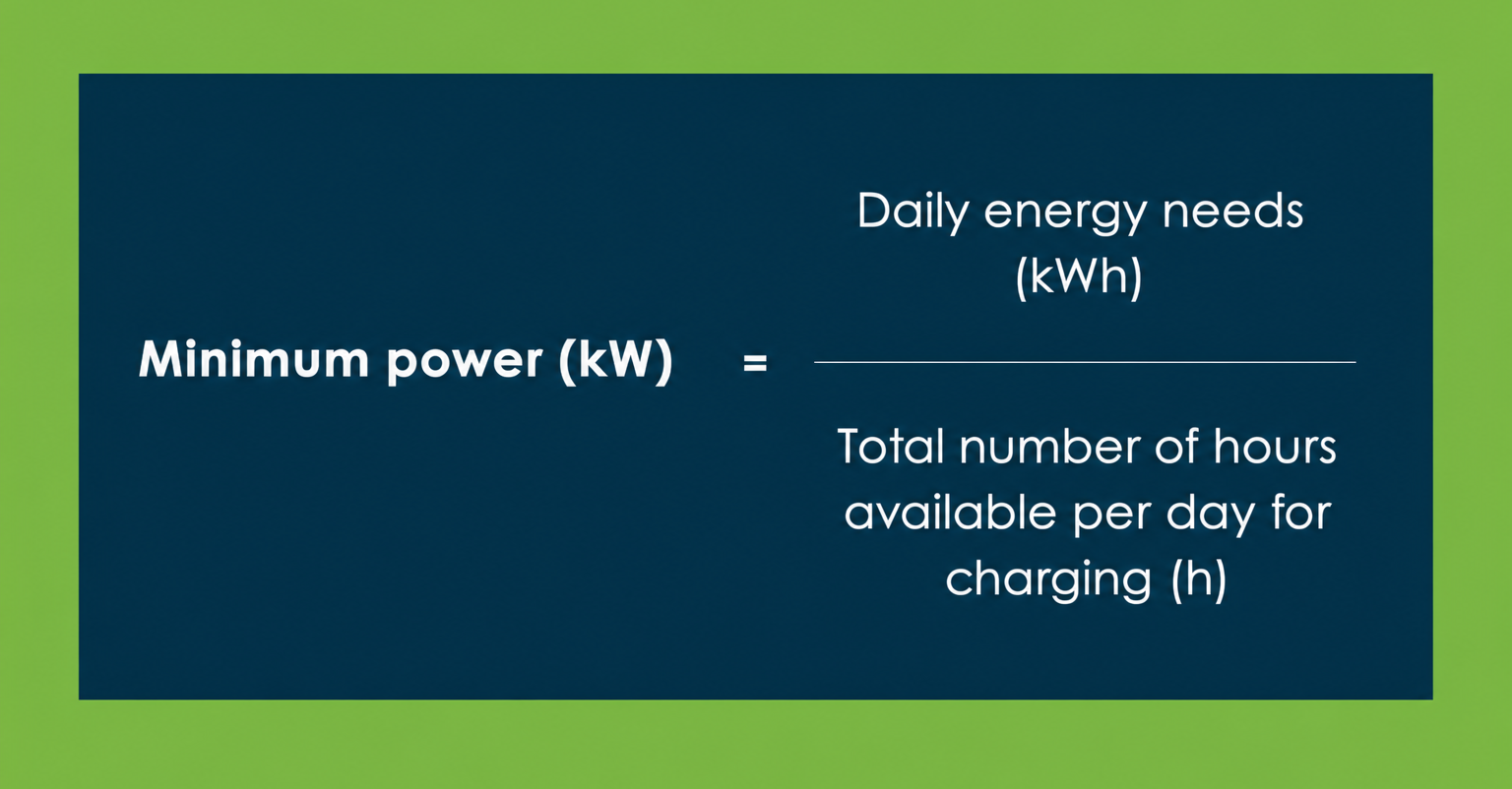
The total number of hours available per day for charging is often the time spent stopped at night, but can also include vehicle downtime, such as the time between two shifts, or the time between uses, provided that charging infrastructure is available nearby.
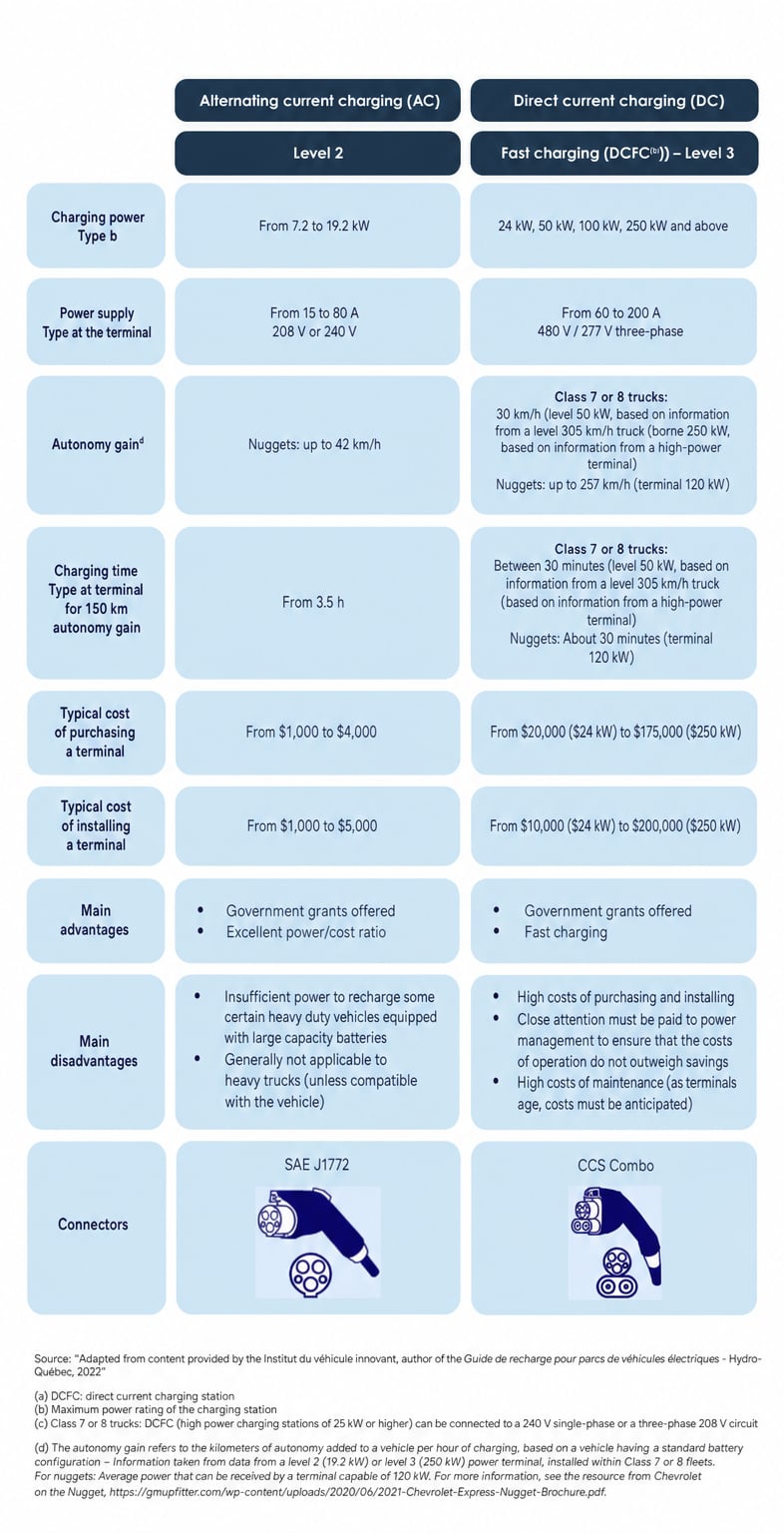
Note: although the guide is aimed at operators of medium and heavy trucks, and Level 2 charging is not always compatible with this type of vehicle, information on Level 2 charging has been added for readers who also have vans or compatible vehicles in their fleet.
Choosing charging stations on your own premises
When deploying charging infrastructure on site, two main categories of stations are generally available: Level 2 charging (so-called "slow") and Level 3 charging (so-called "fast" or DC fast charging – BRCC). The choice depends heavily on the operational needs of the trucks, available downtime and the vehicles' charging capabilities.
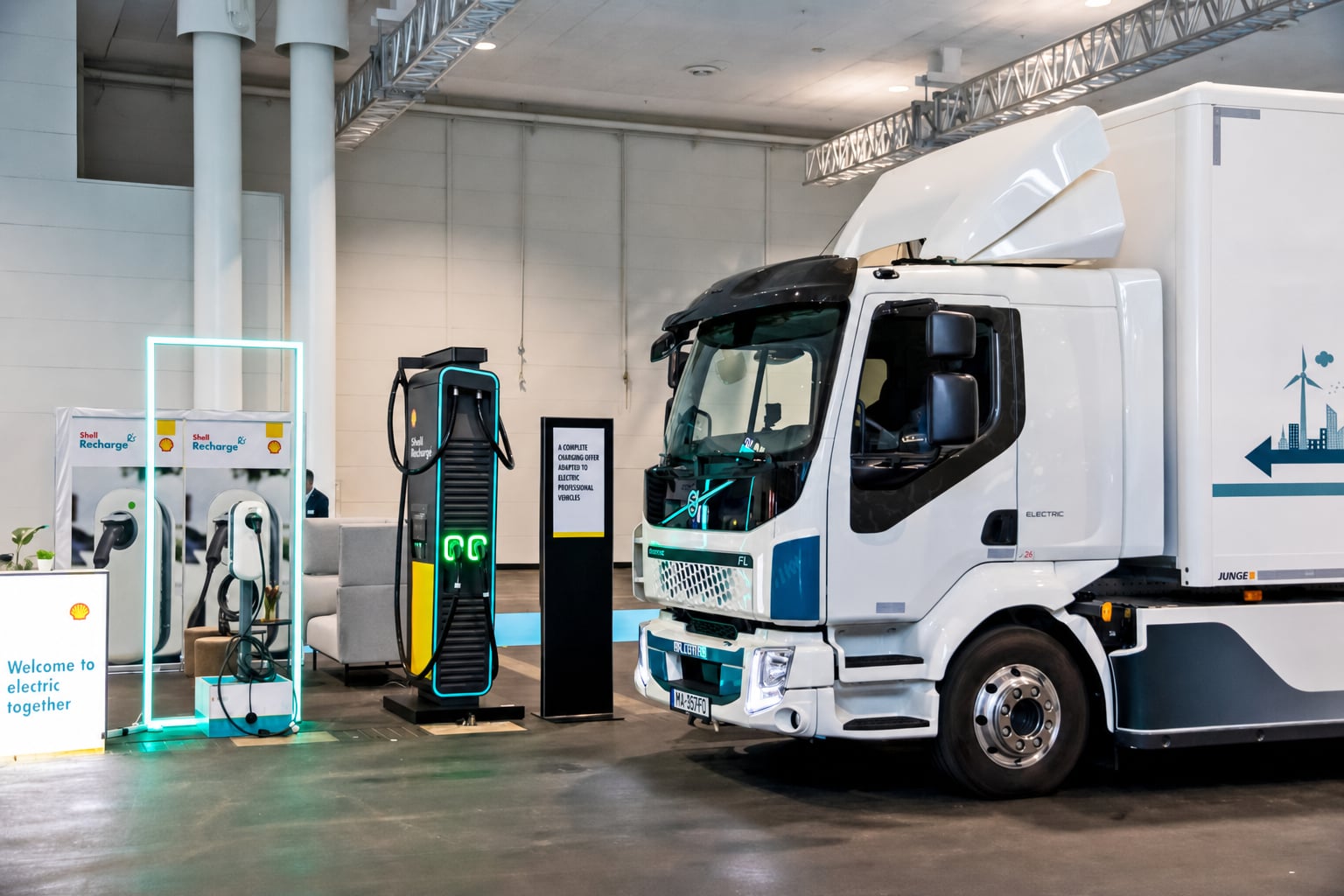
It is crucial to check compatibility: electric trucks are generally not compatible with both types of charging (Level 2 or 3). Generally, Class 7 and 8 trucks accept only Level 3 charging while vans often accept both types of charging. Fast connectors (Levels 2 and 3) are supported by the Recharge+ program, funded by Natural Resources Canada, which encourages the deployment of high‑power stations on operators' sites.
Level 2 chargers operate on 240 V alternating current with a typical power between 7 and 19.2 kW. They use standardized J1772 connectors, interoperable across vehicle and charger brands, and can be wall‑mounted or pedestal‑mounted. These chargers require little maintenance, although cable wear should be monitored, especially in winter. This type of charging often suits van fleets with regular operating cycles and long parking times, allowing a full recharge overnight. Nevertheless, it is not considered for trucks, which are equipped with larger-capacity batteries or used intensively.
Fast chargers operate on direct current with power starting at 24 kW and up to 350 kW or more; 500 kW and 600 kW units, for example, are increasingly available. They use standardized CCS (Combined Charging System) connectors and require more installation space due to cooling and safety systems. Maintenance is greater, including regular system checks, filter changes and cable monitoring. In return, some fast chargers allow a partial recharge in under an hour, depending on the truck and station capacity.
Choosing charging options suited to routes that can be electrified
For many carriers, it is already possible to electrify part of their fleet by focusing only on trips compatible with charging at their own site, without relying on public charging en route. In these cases, a Level 3 charger limited to 50 kW or even 24 kW can often meet energy needs, provided vehicles have sufficient downtime between shifts.
Charging time depends directly on the truck's battery capacity and the charger's power. For example, a 550 kWh battery (450 kWh usable, offering a range of 150 to 300 km depending on conditions) will require about 9 to 10 hours for a full recharge on a 50 kW Level 3 charger, which an overnight depot charge easily allows. At the other extreme, a truck can often recharge its battery to 80% in 90 minutes with a very fast charger (over 300 kW). It is therefore essential to analyze the trips that can realistically be electrified in your current operations: what distance is driven each day, how many hours of downtime between shifts, whether return to site is systematic and whether trucks make multiple trips per day.
Situations requiring faster charging include trucks traveling more than 200 km per day with little overnight charging margin, vehicles used for successive shifts or needing to be returned to service quickly, cases where parking is off‑site, or unforeseen situations requiring a rapid partial charge. In these cases, a Level 3 fast charge more powerful than 50 kW becomes necessary to add operational redundancy, optimize fleet utilization with a charger shared among several vehicles, or avoid installing a dedicated charger per vehicle.
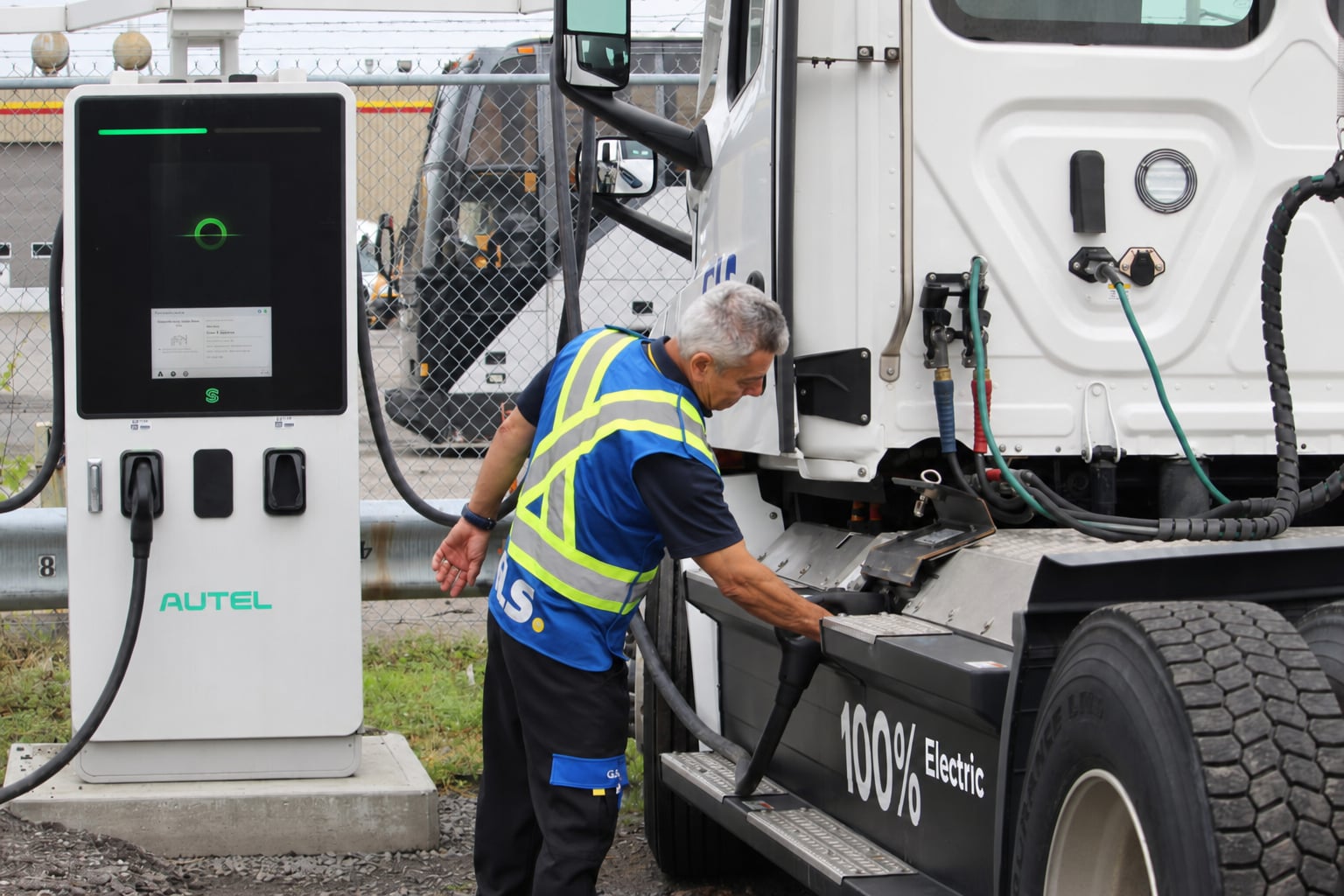
For example, at GLS the charging infrastructure was designed to maximize vehicle availability each morning, and already electrified trucks make trips that can be served by modest‑power chargers.
"We have a total of 50 charging stations, a mix of Level 2 chargers, mostly 19.2 kW per connector, and Level 3 chargers between 50 and 60 kW per connector. We favor dual chargers that offer two connectors for charging." Planning is based on a detailed analysis of actual usage: "We analyzed our operating data – daily distances, types of trips, weather conditions – as well as the technical characteristics of our trucks and those of our brokers. This allowed us to assess the energy required and the charging time needed, then plan installations across all our sites in Quebec."
Peaks and demand charges
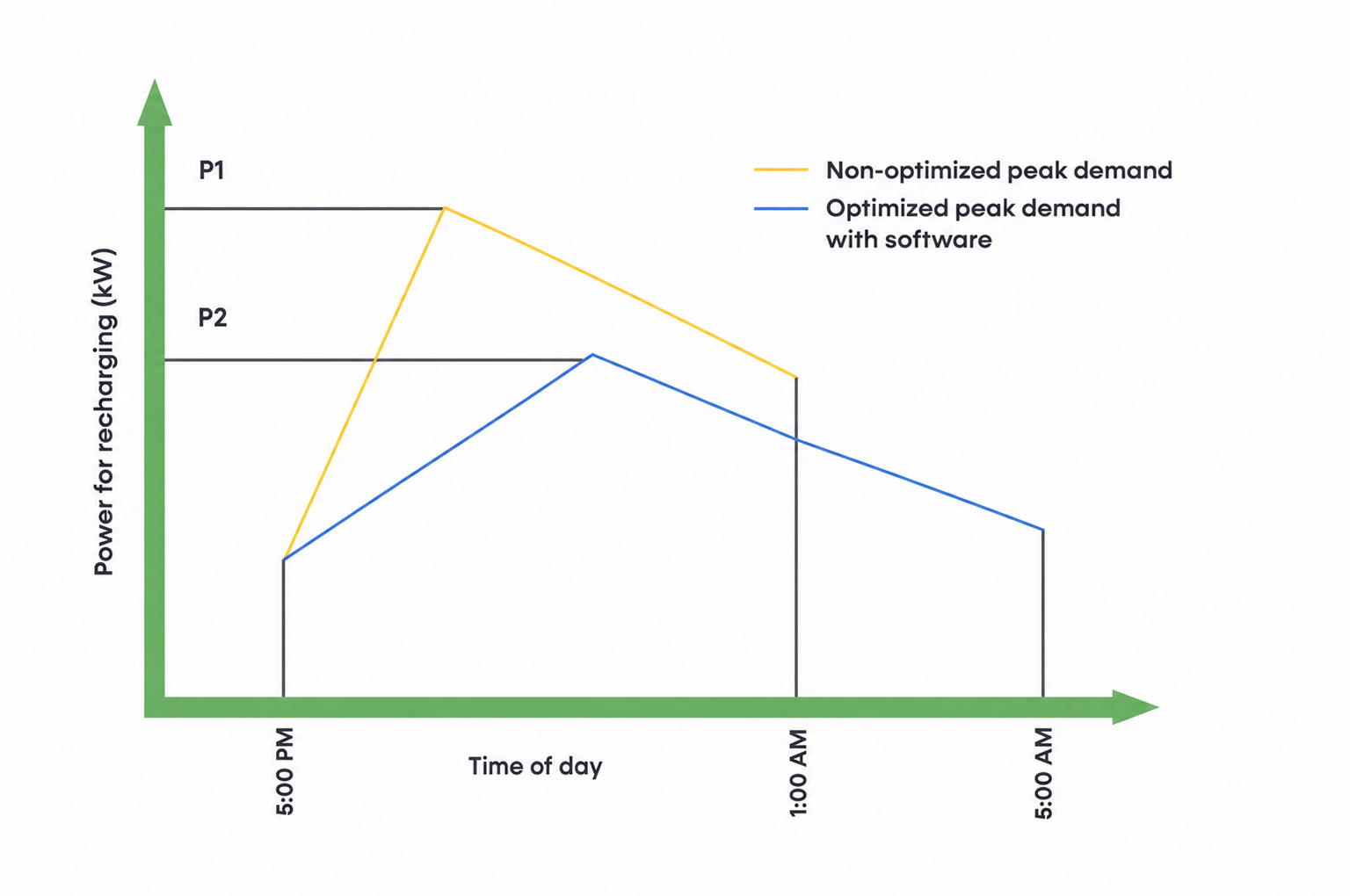
One of the most costly traps in fleet electrification is related to power peaks. Unlike energy consumption (measured in kWh), which depends on the volume of electricity used, power demand (kW) represents the maximum level drawn from the grid at any given time. Electricity bills in Quebec include a fixed portion tied to this peak power: the higher the peak, the higher the bill.
Concretely, running several fast chargers simultaneously or opting for higher power than required can quickly double or even triple electricity costs. During simulationscarried out by the Innovative Vehicle Institute (IVI), it was observed that moving from a 50 kW infrastructure to 150 kW could more than double the operating bill for a single electric truck.
The good news: these costs can be managed. To avoid extra costs related to demand charges, it is recommended to:
- Schedule charging times to avoid all trucks plugging in at the same time;
- Use smart management software that spreads charging over several available hours;
- Size chargers according to real needs, rather than systematically aiming for maximum power;
- Integrate a redundancy strategy (smaller backup chargers, sequential charging, mobile chargers), which ensures continuity of operations without causing overloads.
As Jean‑François Brossard of Location Brossard reminds us:
"The issue of demand charges is central. If you don't anticipate it from the start, you risk paying a lot unnecessarily. It is really worth organizing your charging well to limit demand peaks."
How to choose chargers suited to tomorrow's needs
Installing your first charging stations is more than a simple plug‑in: it is a strategic opportunity to prepare for the future. Even if electrification starts with a limited number of vehicles, it is strongly recommended to plan a scalable infrastructure from the outset. Decisions made today, particularly regarding electrical work, will directly affect future expansion capacity.
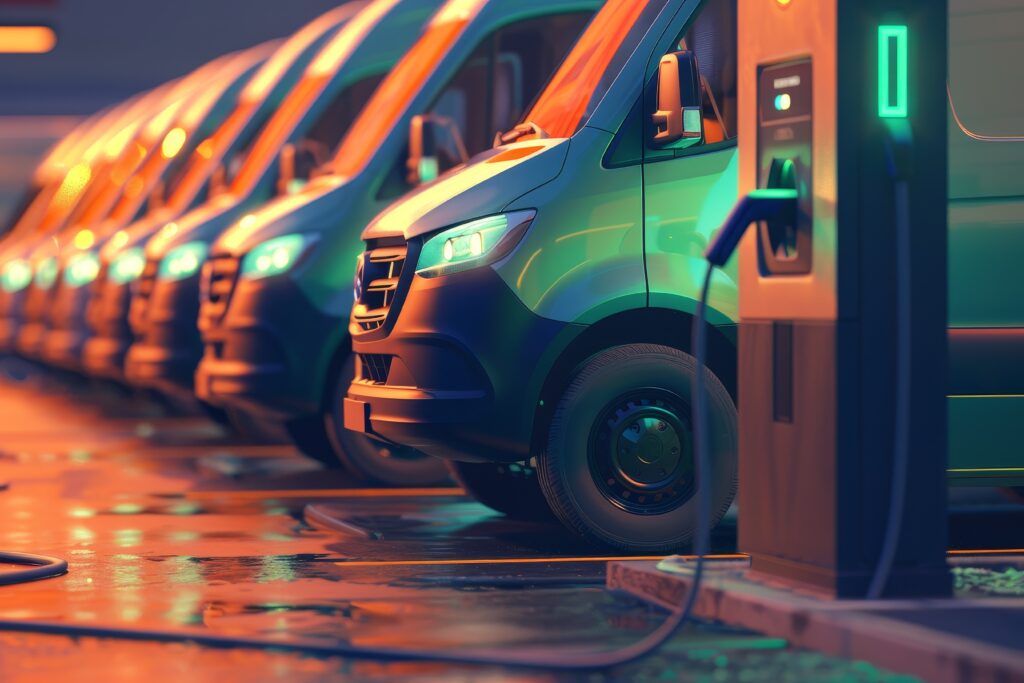
By planning from the beginning a system capable of supporting the gradual addition of chargers, you avoid costly rework later. This medium‑ and long‑term planning also allows you to maximize current subsidies, which may be less advantageous in the years to come, reduce overall costs by consolidating electrical work up front, and facilitate the future integration of new electric trucks without limiting future choices.
Mélanie Camara at GLS emphasizes the importance of a scalable approach:
"We closely monitor market developments and progressively adapt our infrastructure to stay in step with fleet growth and the development of the public network. Our approach remains flexible in order to integrate innovations and meet future needs."
Key takeaways:
The right choice of charger depends first on theroutes that can be electrified today, based on thedowntime available andthe actual logistical configuration. It is therefore essential toanalyze the routesupfront to properly size the charging infrastructure.
And soon... the MCS?
The CCS (Combined Charging System) standard is the one currently found on the majority of fast chargers for trucks, ranging from 100 to 300 kW. But the future is already pointing to a new technology: the Megawatt Charging System (MCS). This ultra‑fast charging standard, designed for heavy vehicles, will allow powers up to 1000 kW (1 MW).
Concretely, this means a truck could be recharged in 30 to 45 minutes, or even as little as 20 minutes depending on conditions. A promising solution for long‑distance trips… worth keeping an eye on in planning your future operations.
The Recharge+ program from Propulsion Québec[2]
The Recharge+ program, established by Propulsion Québec with funding from Natural Resources Canada, aims to facilitate the acquisition and installation of charging infrastructure for electric vehicles. It is intended for members and major private partners of the electric transport cluster, as well as collaborators from the Quebec public sector (municipalities, public institutions, crown corporations).
Recharge+ can fund up to 50% of eligible costs for the purchase and installation of Level 2 chargers or fast chargers (BRCC). The program encourages strategic infrastructure planning to ensure the growth of electric vehicle fleets while maximizing available short‑term subsidies. A step‑by‑step procedure (expression of interest, prequalification, signing of agreement, execution of works and claim) frames projects and ensures their compliance. Recharge+ is in effect until December 31, 2026.
"We were fortunate to benefit from the Recharge+ program for this project. This grant made the project more affordable and allowed us to move forward quickly. I recommend operators analyze all available programs, some of which can be combined and cover up to 75% of the total cost. That makes a huge difference! My advice: take advantage of the aid while it's available and get started quickly." says Mélanie Camara at GLS.
"Thanks to federal funds from the Recharge+ program, we have been able to assist around sixty beneficiaries in installing more than 800 chargers in Quebec so far. The impact of this funding is significant for initiating and continuing the transition within our ecosystem, both for organizations' own needs (workplace and fleet) and for public access." says Sara Pellerin, Acting Director, Member Programs and Services at Propulsion Québec.
For more information and to submit an applicationCharging management software
Using charging management software becomes particularly relevant once you manage a fleet of three electric trucks or more. These systems optimize vehicle charging in real time and reduce costs associated with demand charges on the electricity bill while ensuring vehicles are always ready to perform their operations.
Concretely, these software systems automatically control truck charging to prevent multiple vehicles from charging simultaneously, thereby minimizing consumption peaks. This translates directly into savings on electricity fees, particularly in Quebec where the bill includes both energy consumed (in kWh) and peak demand (in kW), which applies once power exceeds 50 kW — a threshold quickly reached with several Level 3 chargers. Some software, such as Polara's, includes artificial intelligence to optimize all usage and charging parameters and get the most out of existing infrastructure at lower cost.
For example, if a truck needs to be charged for 8 hours but is parked for 12 hours, the software can spread charging over the available period, thus reducing fees related to demand charges. These systems also allow remote monitoring of state of charge via connected interfaces, receiving alerts in case of technical problems or outages, and optimizing winter pre‑heating cycles in cascade to lighten the nighttime electrical load.
It is essential to ensure the chosen software is compatible with all chargers on site, regardless of manufacturer. Some software offers complementary features that are particularly useful: integration with telemetry systems or fleet management software, scheduling by tariff windows, charging history and automated reports, centralized multi‑site management, and remote monitoring with real‑time diagnostics.
To optimize charging, GLS uses the AXSO management system, a subsidiary of Hydro‑Québec.
"This system measures and distributes power in real time among the connected chargers, which allows us to avoid power peaks and control our electricity costs. It also offers increased visibility on charger usage and facilitates overall management of our infrastructure." explains Mélanie Camara.
Pooling your infrastructure also offers additional flexibility, especially during transition phases when your charging capacity exceeds operational needs. This is possible, for example, with the Forestasolution implemented by carrier Nationex, which allows you to make all or part of your infrastructure available, make it visible to the public or reserve it for a partner, according to the time windows you define and at the price you choose.
Energy resilience
The question of energy resilience is at the heart of concerns for companies embarking on electrification. Jean‑François Brossard, Director of Energy Technologies and Innovations at Location Brossard, notes that this dimension cannot be ignored when it comes to charging heavy vehicles.
"We have a generator on site, but it does not power the chargers. Since these are Level 3 fast chargers, we would need a generator far too powerful to support them," he explains.
Rather than investing in an oversized backup infrastructure, the company relied on a redundancy strategy integrated into its offering.
"In our contracts with clients, we specify that the lessor is not responsible in case of a power outage. However, we have provided backup chargers. For our three large Level 3 chargers, we added two smaller chargers of the same level. If one of the main ones fails, the vehicle can be redirected to a backup charger." A pragmatic and economical solution, according to him: "These backup chargers cost relatively little compared to our main installations, so the investment was worthwhile."
Beyond the operation site, resilience is also an issue on the road. Although availability remains limited in Canada, some mobile on‑road charging services are beginning to emerge.
"There are companies that have vans, like Ford Transits, equipped with battery packs. In case of a breakdown on the road, they can plug in an electric vehicle to recharge it for one to two hours, just enough to reach a fixed charger," he illustrates.
Mobile chargers also represent an interesting solution for certain situations.
"These are 50 kW chargers that can be moved from one site to another. They are sufficient to provide a temporary energy boost." In addition to their flexibility, they enable better management of power demand on the grid. "With a 50 kW mobile charger, you avoid exceeding the thresholds at which Hydro‑Québec charges power penalties. That's a significant advantage."
"We work with an excellent partner for service on our chargers. Equipment choice is strategic: you need to ensure that a repair can be made quickly. We have also installed fast chargers at almost all our sites, offering a rapid charging option in case a main charger malfunctions." says Mélanie Camara of GLS.
Carbon credits: a source of revenue for your charging stations
Few people know it, but charging stations for electric vehicles can generate interesting revenue for the companies that own them. Thanks to the Clean Fuel Regulations (CFR) implemented by the federal government, it is now possible to generate carbon credits by providing electricity for electric vehicle charging.
This regulation requires producers and importers of fossil fuels to progressively reduce the carbon intensity of their products. To do so, they must acquire compliance units, equivalent to one tonne of CO2e avoided over a fuel's lifecycle. One way to generate these units is precisely by offering electric charging services.
Jean‑François Brossard, Director of Energy Technologies and Innovations at Location Brossard, confirms the revenue potential while noting the system's complexity.
"Carbon credits are complicated. If you try to manage that alone, you won't really make money. It's a market of buyers and sellers, a sort of exchange." He recommends going through a grouping to maximize the value of generated credits: "Buyers want large volumes, not many small transactions."
This is the approach chosen by Location Brossard, which collaborates with Polara and its Cléo platform to pool its credits with those of other companies.
"Cléo gathers the credits generated by Location Brossard and other companies, then presents them in bulk on the market. This pooling offers much greater selling power than if each company acted alone."
The economic returns are not negligible. "It can represent several tens of thousands of dollars," says Mr. Brossard. He specifies, however, that only the owner of the chargers is entitled to these credits, not the users who charge their vehicles. Aware of the appeal of this advantage, Location Brossard plans to share part of these revenues with its customers starting next year: "We will begin to redistribute a portion of these revenues. It's an attraction factor for the industry."
At GLS, Mélanie Camara mentions that the company has just completed its first process to receive carbon credits and is collaborating with a specialized firm to maximize their value.
Several Propulsion Québec member organizations help charger‑owning companies take advantage of this government initiative, such as the RCP Platform, Swtch, Papillons Infrastructure or Polara.
Charging station installation: what to expect
Installing charging stations requires rigorous planning and close coordination with multiple stakeholders. Jean‑François Brossard recounts the challenges his team faced during their initial efforts.
"We wanted to manage everything ourselves. We started by buying three 350‑kilowatt fast chargers."
This approach quickly ran into several obstacles. "We had difficulties with Hydro‑Québec for the connection, then with the City, which rejected our engineering plan. And financially, we realized that 350 kW chargers can represent an investment of several hundred thousand dollars, not $10,000. On top of that, our vehicles can't even charge at that power — their limit is 270 kW. So why invest in a charger more powerful than necessary?"
It was at that point that the company was able to rely on Polara's expertise.
"Cléo truly supported us throughout the process. They supervised the entire project, asked the right questions, made excellent recommendations and above all facilitated our connection with Hydro‑Québec. Their knowledge of the right contacts accelerated the procedures remarkably."
"We collaborate with installation specialists, which simplifies the process a lot. The main challenge remains connection lead times: you must submit your requests as early as possible." stresses Mélanie Camara of GLS.
Questions to ask your charging equipment and service providers
Before choosing your chargers and suppliers, several essential questions should be asked.
First, what are the delivery and installation lead times for the equipment?
The arrival of electric trucks and the commissioning of chargers must be perfectly synchronized to avoid any operational delay, or at the very least charging infrastructure must be installed before the trucks arrive.
Next, is the charging management software compatible with all charger manufacturers?
In the long term, your fleet could be equipped with chargers from various suppliers. It is essential that the software be interoperable to avoid being limited in your future choices.
Does it handle grant applications, offer support for electrical and logistical planning, help with drafting calls for tenders or analyzing bids?
The support offered by the supplier — you can choose one that provides turnkey service and works with different charger manufacturers — also deserves to be detailed.
Does the supplier provide a contingency plan, a rapid response time, or solutions such as adding a generator, separate circuits or priority chargers?
The question of electrical redundancy is crucial. In case of outage or failure, next‑day deliveries can be compromised.
You should also clarify operating fees related to the software if the number of trucks changes.
Some software charges variable fees depending on the number of connected vehicles or functions used. Finally, check system compatibility with your current IT equipment to avoid unexpected upgrades.
"When choosing suppliers, we ensure that the management software is compatible with all our chargers and that support includes planning, grant applications and quick service in case of failure." explains Mélanie Camara at GLS.
On‑the‑road charging: a reality to plan for now
In Quebec, the public charging network for heavy trucks is still under construction, but progress is notable. Within three to five years, several major logistics corridors, notably highways 20 and 40 between Montreal and Quebec City, will be covered by charging sites designed exclusively for commercial vehicles. This development represents a significant advance for freight transport electrification.
Martin Archambault, Senior Delegate – Business Development, Energy and Mobility Offers at Hydro‑Québec, specifies that these sites were designed from the start to meet the specific needs of heavy vehicle operators.
"Truck sites are designed specifically for them: reserved chargers, CCS connectors, 24/7 access, and spaces adapted for heavy vehicle maneuvers. We think from the outset about the realities of freight transport," he emphasizes.
Le Circuit électrique, powered by Hydro‑Québec, has already put into service three charging sites accessible at all times for Class 4 and up vehicles. In 2025, five new sites will be added, with a planned deployment rate of five to ten additional installations per year. The chargers used offer powers ranging from 180 to 350 kW and are equipped with CCS connectors, ensuring compatibility with the majority of electric trucks currently on the market. In addition, tests are planned from summer 2026 to integrate the future MCS (Megawatt Charging System) standard, notably on Montreal's North Shore.
Although the majority of charging will continue, in the short term, to take place on operators' private sites, it is essential to integrate the developing public network into fleet strategic planning. For companies making recurring trips between distant hubs, these public chargers could quickly become indispensable. For others, they will offer an alternative in case of unforeseen events, or redundancy in case of failure — a true insurance policy for operational continuity. In the medium term, this territorial mesh will mainly make it possible to electrify routes that until now seemed out of reach. That said, charging on private sites, at the depot or at clients' locations for example, should be prioritized, as it is cheaper than public charging.
"The public charging network for heavy trucks will become an important asset. Even if today our priority is charging at our sites, we are integrating the developing network into our planning to broaden our possibilities." says Mélanie Camara.
Purchase or lease of charging stations: a strategic choice
The mode of acquiring charging stations is a key decision that must be evaluated according to each company's business model and priorities.
At GLS, the choice was to purchase in order to retain full control over the infrastructure.
"We chose to buy our chargers to have full control, but each company must evaluate according to its business model," says Mélanie Camara, Director Environment and Sustainable Development. "The important thing is to consider maintenance costs, flexibility and the speed of technological evolution."
Conversely, Location Brossard opted to lease Polara/Cléo chargers, an option deemed more coherent with their core business — vehicle rental.
"This formula allows us to benefit from integrated services while transferring part of the technical risks to the supplier," explains Jean‑François Brossard, Director of Energy Technologies and Innovations. "It also promotes operational flexibility and limits initial investments as well as responsibilities related to equipment maintenance."
Planning your charging infrastructure well: the essentials
Take the time to fully understand your real needs.
Before choosing and installing your chargers, take the time to fully understand your real needs. Analyze your routes, downtime, shifts: this data will determine the power and number of chargers required, without unnecessarily oversizing your installations.
Adopt a gradual approach.
No need to invest massively from the start: technology evolves quickly, so it's better to start small, test, adapt and then grow. Support from experts in energy transition or consulting engineers can save you from many costly mistakes, notably regarding available electrical capacity, impacts on your bill or the choice between leasing and buying.
This is the approach favored by GLS, which planned its charger purchases with both current needs and future growth in mind.
"To properly plan your infrastructure, you must think about future growth while meeting current needs. Stay flexible, collaborate with experts and plan your sites and electrical capacity from the outset: it will save you time and money," emphasizes Mélanie Camara, Director Environment and Sustainable Development.
Also think long‑term.
By anticipating your future needs today, you will maximize available subsidies and reduce costs related to potential adjustments. Don't forget to integrate on‑road charging into your strategy: the public network is expanding and can offer new possibilities.
Comme le rappelle Jean-François Brossard, de Location Brossard : « Un projet bien pensé aujourd’hui, c’est une transition plus simple et moins coûteuse demain. »


