


A recent study conducted by the Council of Information and Communications Technologies (CTIC) in partnership with Propulsion Québec, entitled Recharging the electric transportation sector in Quebec, sheds light on the workforce needs of Quebec's electric and intelligent transportation (TEI) industry. This transition to more sustainable modes of transportation will create thousands of jobs in the years to come, at the vocational, college and university levels alike. This situation has prompted the industry to mobilize as part of the project En route, destination: careers in TEI, in order to showcase the sector, the companies, the jobs and the training in a booming sector strongly oriented toward sustainable development.
Discover the En route project
An unprecedented growth in TEI will have a major impact on the workforce
In 2020, the Quebec government launched its Plan for a Green Economy 2030 making the electrification of the transportation sector a major priority. This transition will enable more sustainable economic growth, usher in high-quality investments and support job creation. Quebec has succeeded in positioning itself in the booming electric and intelligent transportation (TEI) industry. It is particularly significant in the commercial vehicle market, producing electric garbage trucks, school buses, heavy equipment, utility vehicles, as well as recreational vehicles.
Propulsion Québec also forecasts an unprecedented growth of the electric and smart vehicle fleet over the coming years, as illustrated by the following chart.
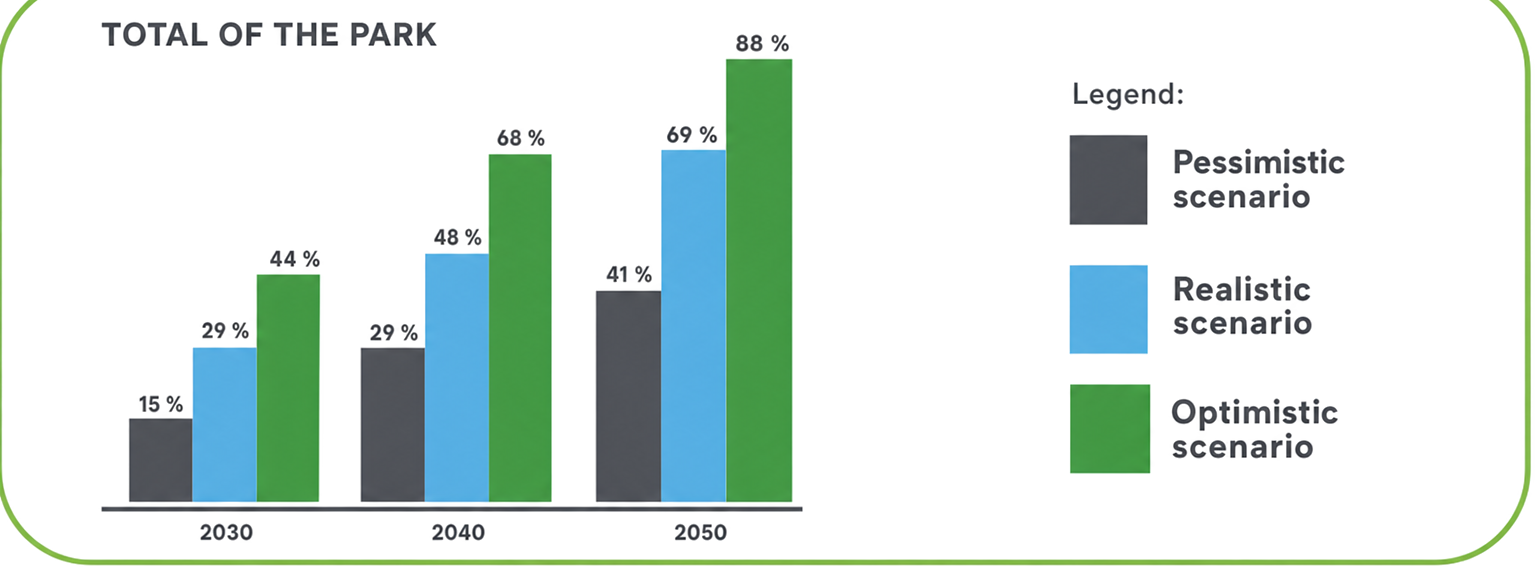
Evolution of the share of electric and smart vehicles in the North American fleet, 2030-2050
The shift to more environmentally friendly vehicles, greener production processes, and advanced automation and digitization will fundamentally alter workforce and skills needs, which the industry is already preparing for.
Impact of the transition to TEI on employment and skills
The study Recharging the electric transportation sector in Quebec highlights important findings about the evolution of the workforce and skills.
Indeed, although the study establishes that certain job categories are expected to decline, it is clear that gains will outweigh losses. Thus, demand for skilled workers will increase, particularly for profiles from STEM (science, technology, engineering and mathematics) training and for more abstract and technical professions.
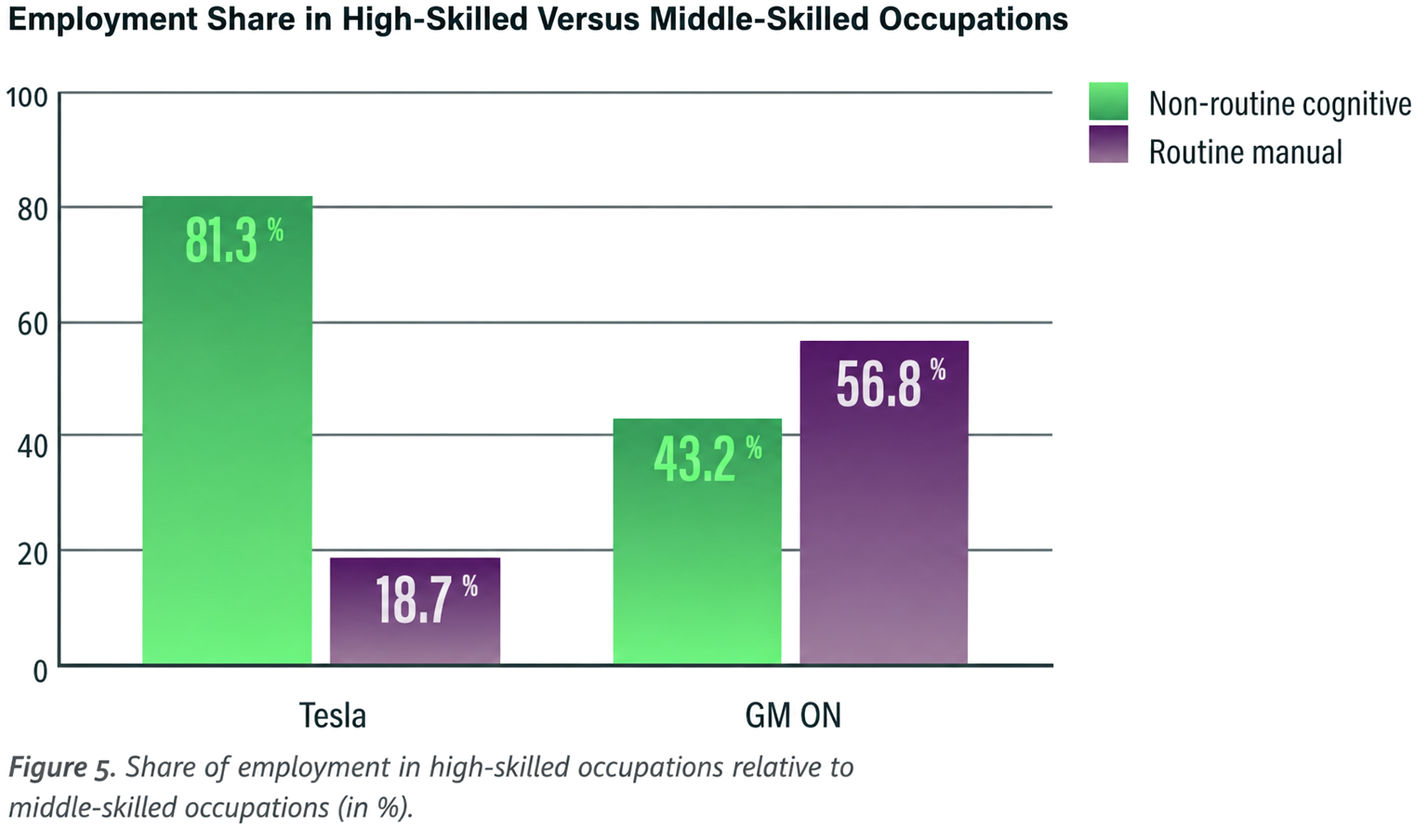
The change in skills required by the shift from manufacturing internal combustion vehicles to manufacturing EVs can be illustrated by comparing the skill profiles of employees of a pure EV original equipment manufacturer (OEM) (Tesla) with those of a traditional OEM based in Ontario (GM). Indeed, as can be seen in the figure below, about 81% of Tesla's current workforce consists of non-routine cognitive occupations, compared with about 43% of GM's Ontario-based workforce. Although routine manual occupations still represent the majority of GM's workforce in Ontario (the figure below highlights disruptions faced only by equipment suppliers), a transition to electric vehicles is likely to shift skill requirements from routine manual occupations to non-routine cognitive occupations.
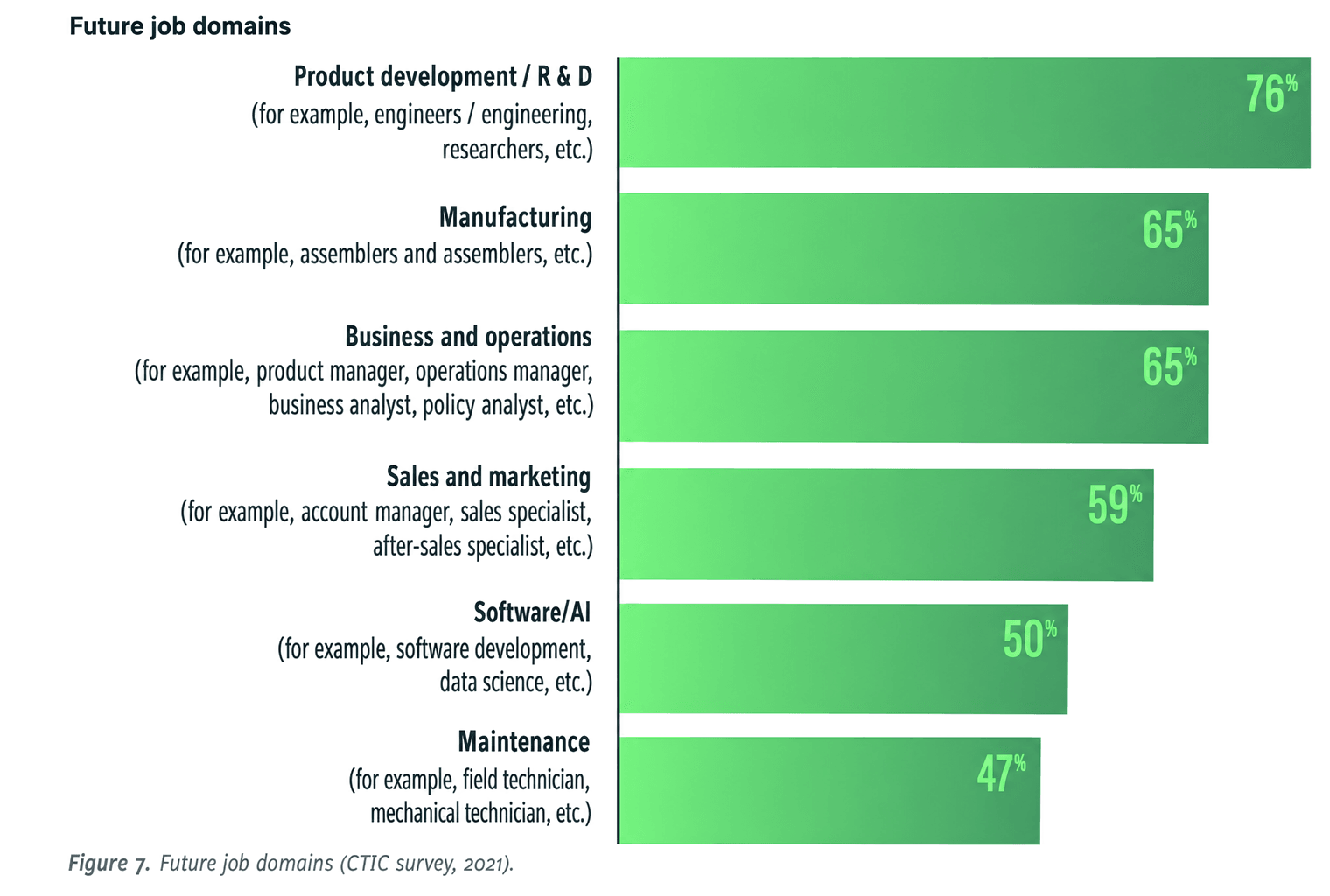
Another important lesson from CTIC's work is summarized in the diagram below, which presents the future hiring areas of Quebec companies in the sector.
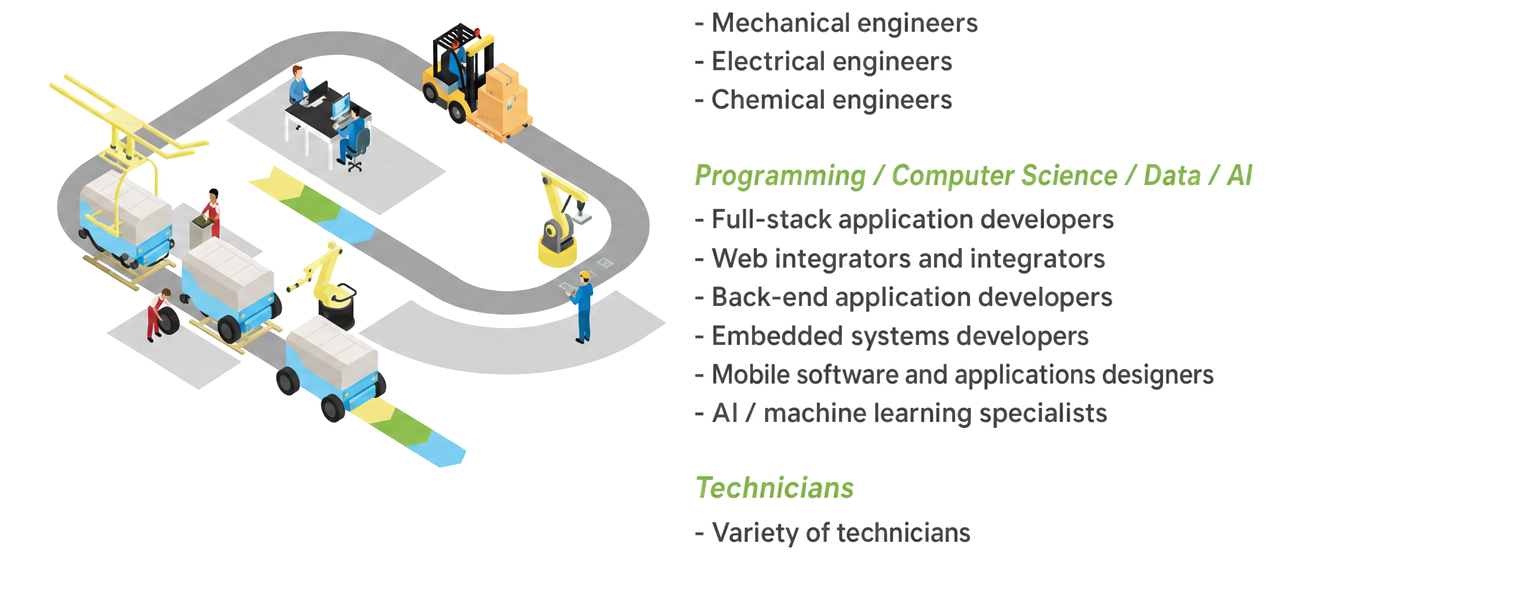
It is therefore expected that the most in-demand roles in sector companies in Quebec over the next five years will be the following:
A worsening shortage and major skills changes expected
A talent shortage, coupled with the rapid pace of industry growth, means that many companies in the TEI sector face recruitment and retention challenges. The CTIC survey revealed that most companies in the sector find it "very difficult" or "quite difficult" to hire qualified talent for in-demand positions.
The most sought-after and hardest-to-find roles are illustrated by the following chart and more acutely affect positions related to software and AI, product development / R&D engineers, and manufacturing positions.
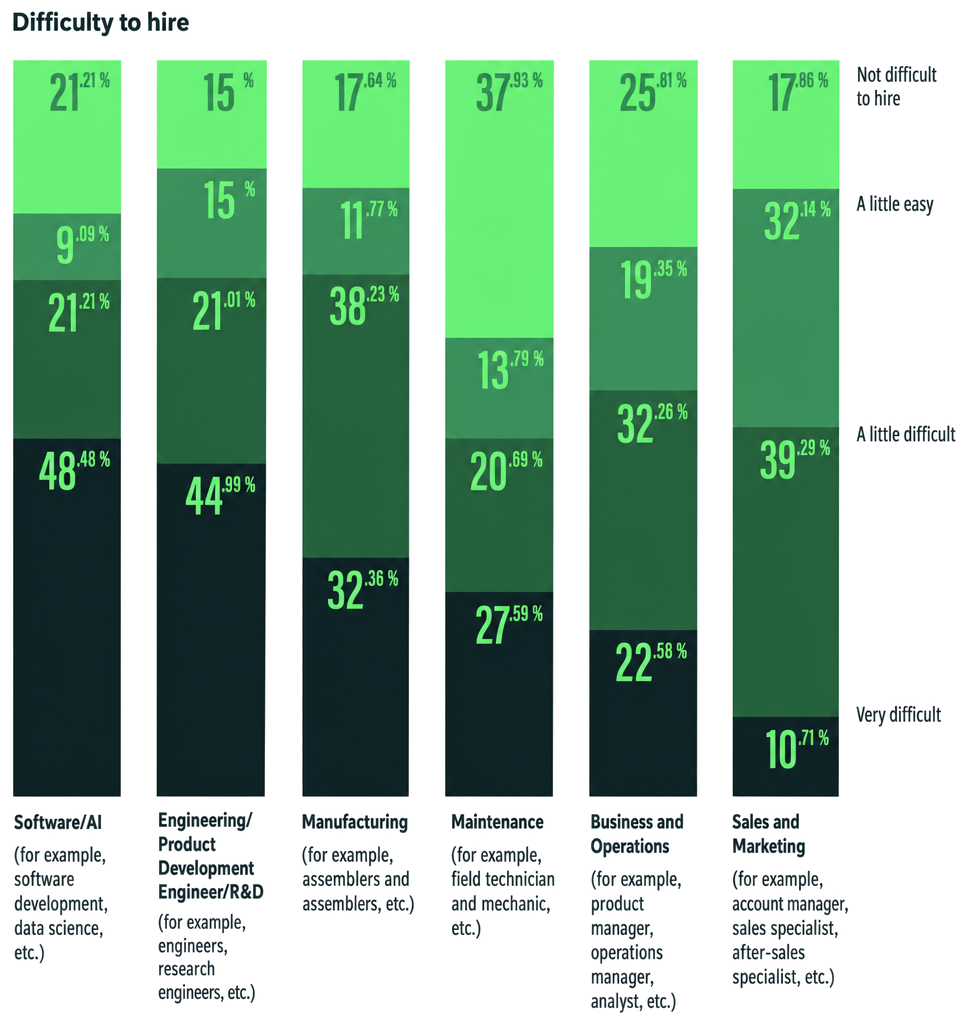
Several respondents in the study described long wait times to fill key engineering and software development positions, and even stated that hiring candidates with engineering or software development skills and knowledge of the EV field is "almost impossible".
Besides engineers and developers, respondents note that commercial and sales roles are also hard to find, particularly technical sales specialists and project managers. Although these roles do not require the same technical EV expertise as developers or engineers, respondents suggest that a solid understanding of EV technology is necessary for these professions, which is hard to find.
The TEI industry is mobilizing for employment
Through Propulsion Québec's Talent and Workforce initiative, the industry has mobilized over the past three years to help address workforce issues related to the emergence of a new industry. Two initiatives deserve particular attention:
1. Attract the best talent and raise awareness of Quebec's TEI sector
Propulsion Québec created the initiative En route, destination careers in TEI in order to showcase the sector, the jobs, the training and the companies to ultimately increase the sector's workforce pool. More than twenty partners, including many large companies such as BRP, Alstom and Merkur, are partners in the project, as well as numerous educational institutions at the vocational, college and university levels. More than 750 positions are currently being recruited. The many activities promoted as part of the project include promotional campaigns (in partnership with Québécor média and the AVEQ), content development, networking activities as well as the RDV En route (October 26, 2022), a unique event highlighting Quebec expertise in TEI, for recruitment and discovery of training related to the sector.
2. Increase understanding of workforce needs and skills development
Propulsion Québec proposes setting up a roundtable, in partnership with sectoral workforce committees, companies, educational institutions and the relevant ministries, in order to better document the industry's needs and influence the development of training for skills that will meet the sector's needs.


