


Quebec is firmly committed to the energy transition, promising to fully electrify its transport, heating and industrial sectors by 2050. Both levels of government and multinationals are investing billions to develop Quebec's battery production industry. Hydro Québec tables its 2035 action plan to achieve carbon neutrality by 2050.
It's against this backdrop that McGill University created the Centre for Innovation in Energy Storage and Conversion (McISCE) in 2021, bringing together some 50 researchers and over 150 graduate students.
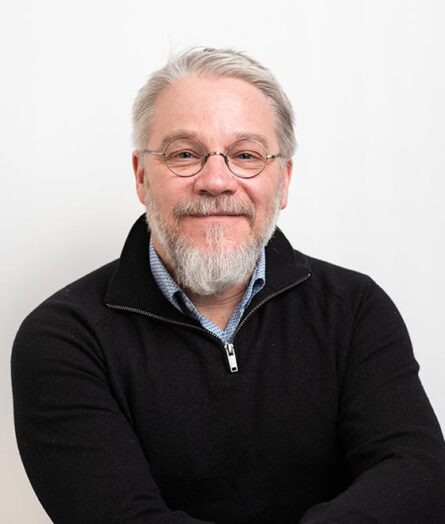
"At present, public authorities and investors are giving high priority to the production of green energy, and that's all very well, but the problem of large-scale storage of this energy remains almost unresolved, particularly for power grids, as does the conversion of large industrial processes," says Sylvain Coulombe, physics engineer and director of McISCE.
McGill also co-hosted, with the International Economic Forum of the Americas and the Université du Québec à Trois-Rivières, a one-day conference entitled "Chargé à bloc : à l'avant-garde de l'énergie propre". Held on November 15, the event brought together researchers, business leaders and senior government officials, as well as Ministers Pierre Fitzgibbon (Economy, Innovation and Energy) and Steven Guilbeault (Environment and Climate Change).
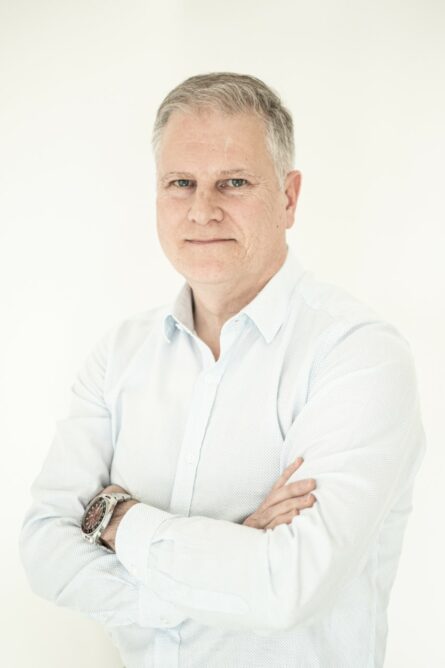
"We've been preparing this event for a year now," explains Benoit Boulet, electrical engineer and Assistant Vice-Principal for Innovation and Partnerships at McGill University. "Quebec is in the process of radically reorganizing its electrical grid, as well as investing massively in a new industry, the battery sector, and its entire supply chain. Our intention is to point out the following to companies and governments: "Research is also part of the chain. It's going to take thousands of engineers and scientists." "
Storage and conversion
"Now that the electrification of transport is well underway, there's still a huge amount of development to be done to make batteries more efficient," explains Sylvain Coulombe. "Not to mention the problem of recycling. Too many batteries are still designed without any end-of-life considerations.
Around a third of McISCE's researchers are working on new materials for anodes and cathodes, as well as on the development of solid electrolytes, which would have the advantage of not being flammable. "With our electron microscopes, we can observe the behavior of every atom in a battery," explains Benoit Boulet.
McGill researchers are also exploring alternative energy storage and conversion techniques. Quebec's abundance of renewable energy makes it possible to produce hydrogen or "green" ammonia, which can then be reacted or "broken" to release large quantities of energy. Ammonia has the advantage of being the most widely produced industrial molecule in the world," says Sylvain Coulombe. Everything needed to transport and contain it has already been developed and used.
Other avenues for fundamental research includemetallic fuels such as iron or aluminium powder. When they react with air or water, these powdered metals can develop lightning energy, and without carbon. "This is the principle behind the rocket engines on the Space Shuttle, which use aluminum powder as fuel," explains Benoit Boulet.
Metallic fuels are of great interest to those wishing to green heat-intensive industrial processes - think green steel or green concrete - but the first likely application will undoubtedly be shipping, believes Benoit Boulet. "Our researchers have already patented the burner," he says.

The challenge of acceptability
Of course, all these solutions will be valid only if they are produced from renewable energies, and if their economic cost is acceptable. An important aspect of McISCE's work is the analysis of the life cycles of the various options explored, as well as their impact on society. "We'll be shooting ourselves in the foot if the alternative solution is worse than the problem we're trying to solve," warns Sylvain Coulombe.
This is what makes McISCE so special. This innovation center brings together not only engineers, physicists and chemists, but also architects, political scientists, economists and communication specialists.
"It would be a mistake to believe that science and technology can do everything," he asserts. For example, the transition from the dream of the electric car to its current state of advancement perfectly illustrates the meeting point between technological progress and the evolution of mentalities. "New technologies need to be understood, adopted and accepted, and scientists can do nothing without the humanities."
Sylvain Coulombe also emphasizes McISCE's interest in changing regulatory frameworks. "When it comes to energy transition, public policy is just as important as research, and the fit between the two is critical."
The participation of political scientists, economists and geographers in research in this field is therefore crucial. The two engineers see it as an issue of social justice. The efficient house or the electric car," says Sylvain Coulombe, "won't work if they're unaffordable for half the population.
He is delighted to see that young researchers are particularly concerned about the social impact of their work. "In my generation, we were almost strictly technical, and then we moved on to other things. But the next generation is asking these questions spontaneously. That gives me a lot of hope.


