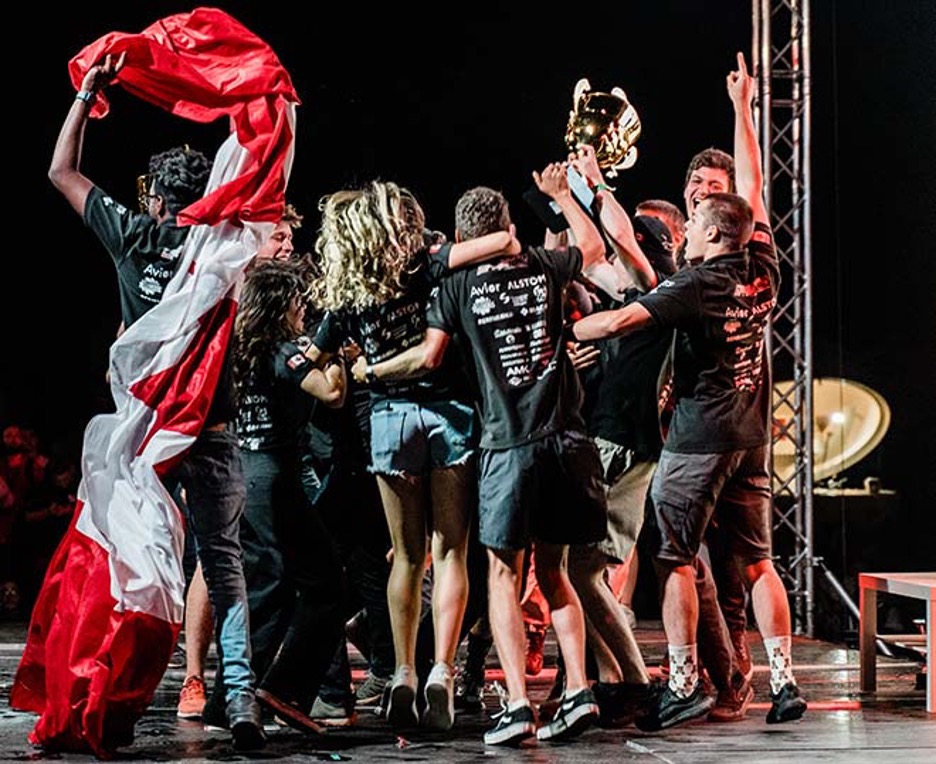


Formule ETS, a student club of theÉcole de technologie supérieure (ÉTS)embraced the energy transition by taking on a major challenge: switching from an internal combustion engine to an all-electric powertrain. This transformation opened the way to several improvements and better performance in competitions. Last year,Formule ETSwon the 1stplace at FSAE Michigan, the most prestigious competition in North America.
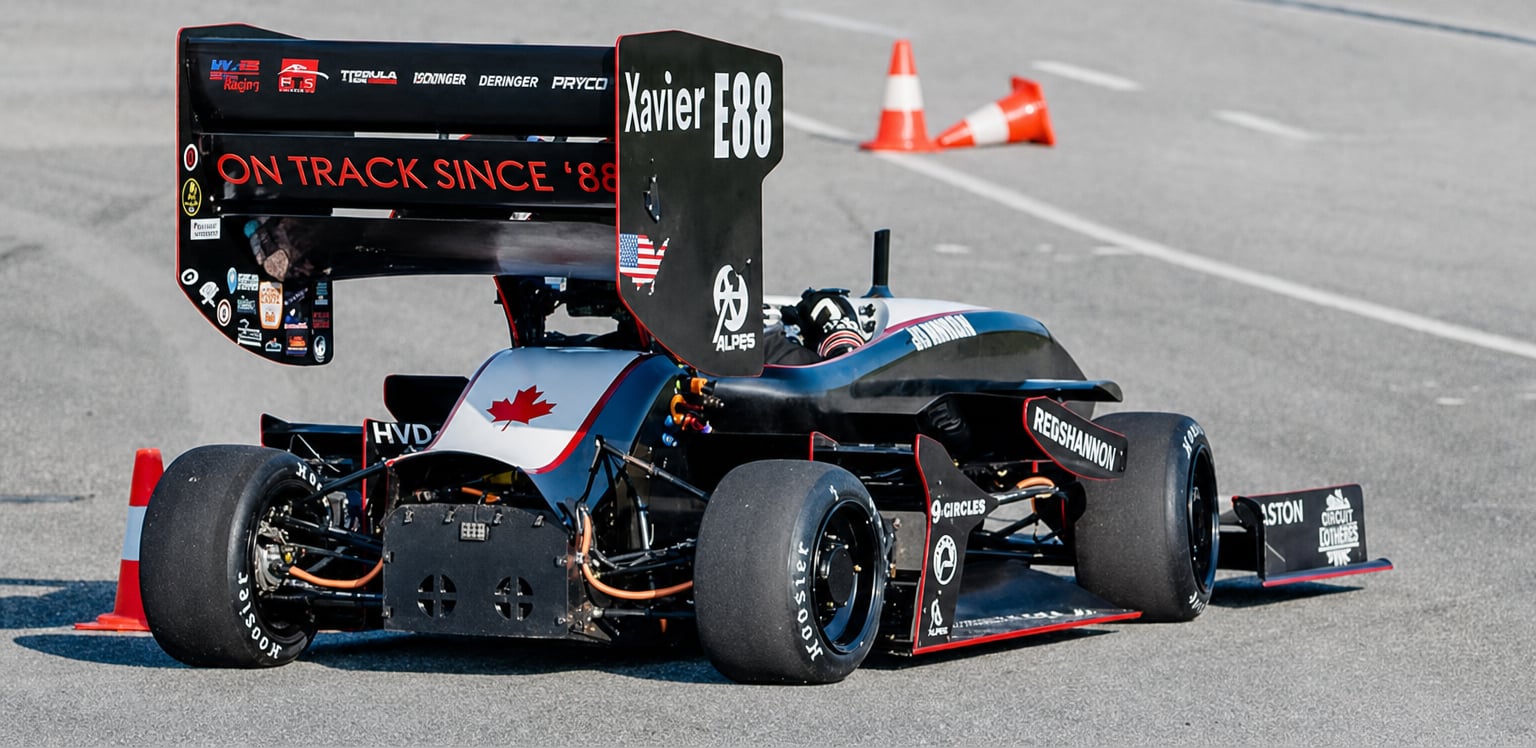
2020-2021: From the gasoline engine to all-electric
The ÉTS prototype went from an internal combustion engine, located in the car's chassis, to four electric motors, placed in each of the wheels. This transition required extensive design work at the outset to make room for motors, planetary gear trains, cooling systems, in addition to the standard parts related to brakes and suspension.
A 500 V battery of approximately 6.7 kWh was built from 3.8 V commercial cells according to SAE safety standards.
The throttle system also became much more complex. The accelerator pedal was previously simply connected to a cable that regulated the airflow to the engine. It is now a series of electrical signals that go from a potentiometer (the pedal) to the onboard computer, then to the inverters to regulate the motors' speed. Several components also need to be powered, which makes the wiring harness very elaborate.
2022: Consolidation of the changes
The team focused on five assemblies in order to fix certain problems that occurred during competitions.
- The battery was rebuilt to prevent overheating.
- The wiring harness was completely redesigned to address certain shortcomings, including connection losses and short circuits.
- The gear trains were improved
- The cooling system was changed
- A four-wheel drive system was implemented.
In a friendly competition, this prototype completed the course 2 seconds ahead of the last internal combustion prototype (2019).
2023 to the present: toward new heights
The chassis was revised and lightened, and the suspension system as well as the battery were reworked. In total, 36 kg were removed from the car. The performance of the onboard computer was also greatly increased. Power delivery to the motors is now actively managed by control algorithms, which minimizes energy loss to the wheels. Next projects in the pipeline? Motors and an onboard computer entirely manufactured by club members.
ÉTS student clubs: another way to orient one's studies toward practical experience
Student clubs offer the opportunity to put into practice concepts learned theoretically in class and even to take learning further. One thing is certain: Formule ETS hasn't finished dazzling us.