


By integrating charger manufacturing, software development and network management, FLO has been able to perfect the electric vehicle (EV) charging experience and rise as a leader in North America. To maintain its lead in this fast-moving market where innovation investments rule, the company turned to the Fonds de solidarité FTQ to support its growth.
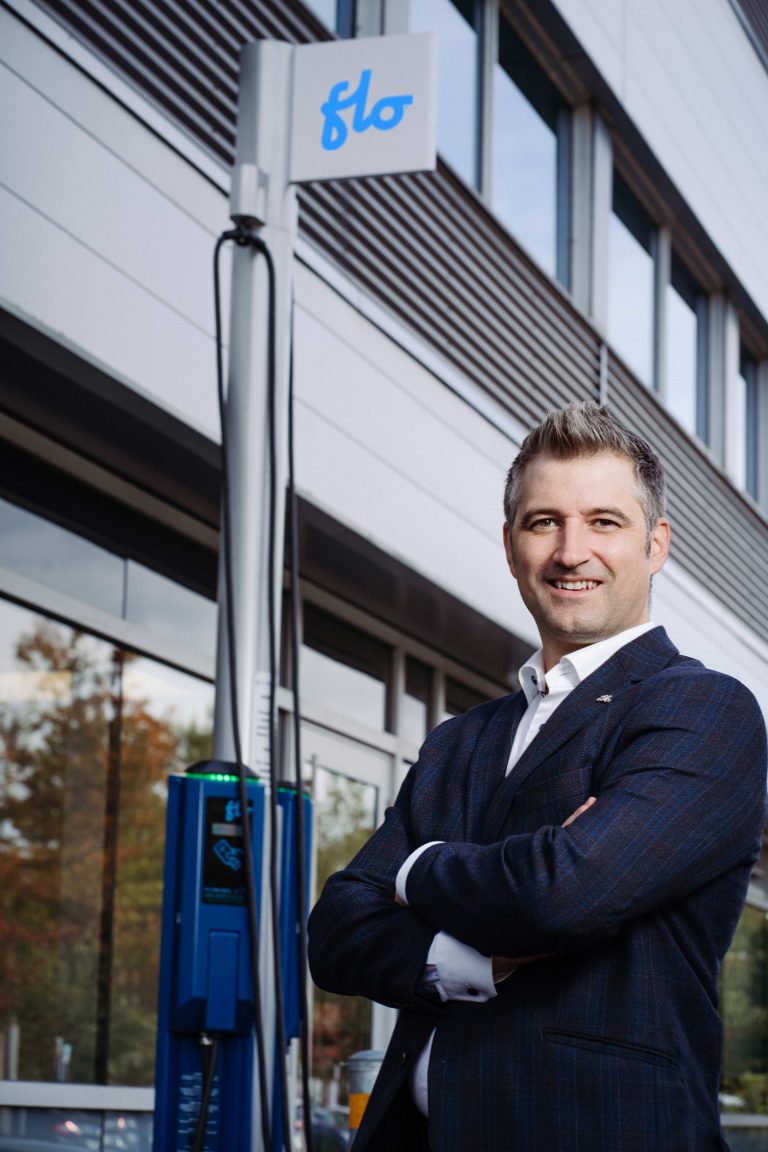
"I am fortunate to have been born both in this era and in Quebec," often says Louis Tremblay, president and chief executive officer of FLO.
Passionate about cars from a young age and aware of the need to act on climate issues, this entrepreneur at heart launched an electric vehicle project in 2004 while studying at Université Laval. That naturally led him to focus on the crucial element for accelerating EV adoption: charging. Our province abounds in engineering expertise, both electrical and software, and in his view is overflowing with talent to "do things properly and efficiently." As a result, the company he founded in 2009 is today a market leader with a wide range of products for different users and charging points, and one of the largest networks across Canada and the United States.
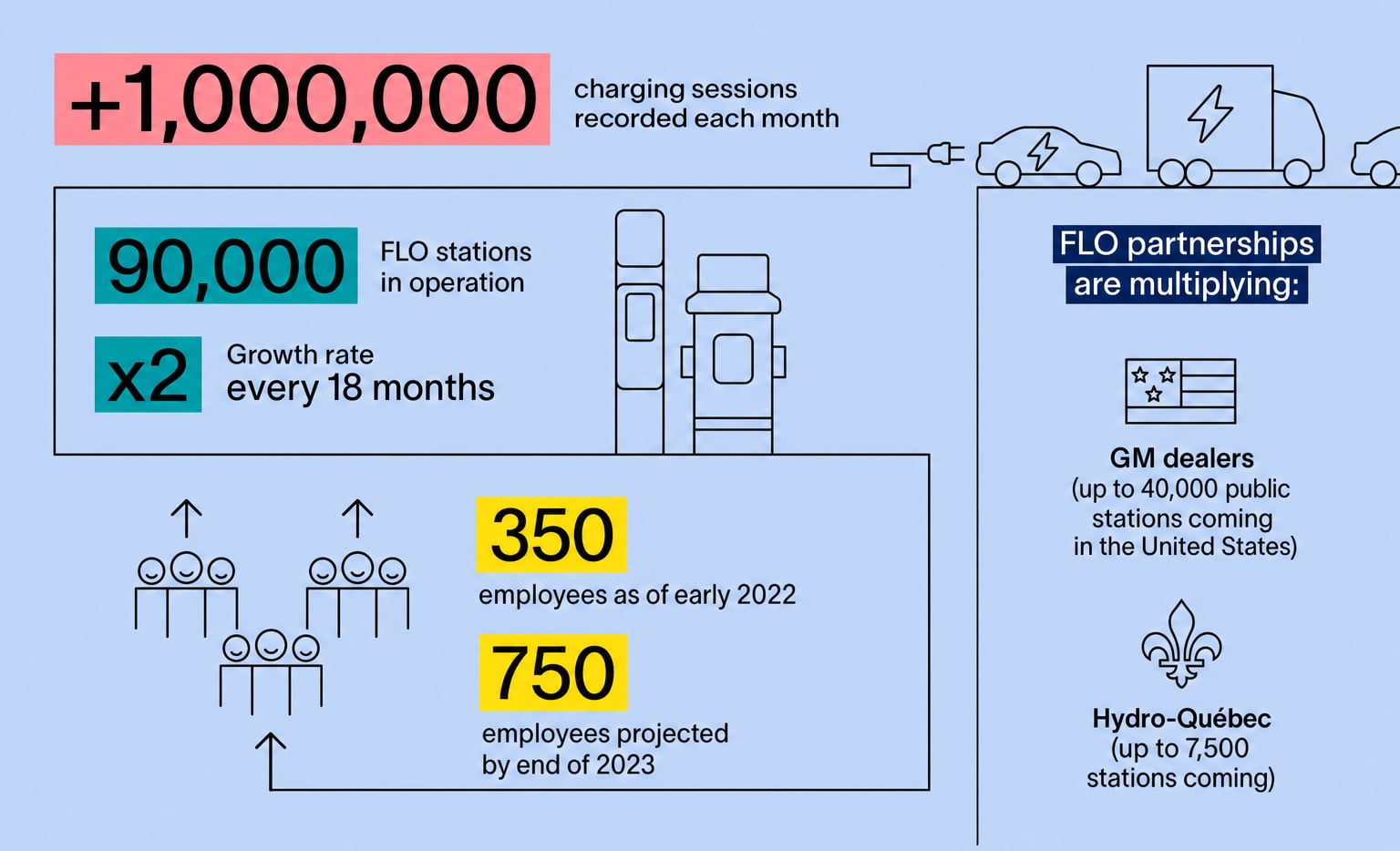
If the EV adoption curve has accelerated recently, it's not only because our governments encourage it to meet their emissions targets, but also because visionaries like FLO made it possible by paving the way with highly reliable, robust and innovative infrastructure.
"When you look at the budgets devoted to vehicle electrification in North America over the past two years, it is clear we have passed a point of no return," observes Louis Tremblay. "For a long time, we were a bit like surfers preparing while waiting for the perfect wave. Gradually, we developed our products and our software for different market segments, so that we were ready for the current surge. We intend to accelerate the deployment of our charging stations to really ride this wave!"
Everything for the experience
Headquartered in Quebec City and with two plants in Shawinigan, and another in Michigan since this winter, the company owes its strong growth to a simple vision: to offer the best possible charging experience.
"It was important that early adopters of this technology not find themselves stranded on the side of the road. That's why from the beginning we integrated under one roof charger manufacturing and the development and management of mobile apps and network management software. This gives us a degree of control over the charging experience, compared with suppliers who focus on only one aspect of the equation," explains Louis Tremblay.
This is how, all across North America, FLO has been able to establish itself against players who did not offer the same levels of reliability and availability.A study conducted in 2022 by the University of Berkeleyindicated that only 72.5% of competitors' public chargers in the San Francisco Bay were functional. FLO, for its part, guarantees 98% uptime at all times.
Besides availability, there is charging time: and the brand-new FLO UltraMCbrings most batteries to 80% in 15 minutes, thanks to an output power of up to 320 kW (depending on the vehicle, configuration and number of cars charging). That represents a gain of 200 to 300 kilometres of range, in the time it takes for a snack or a coffee. Ideal for convincing holdouts to make the jump to electric.
"Although the vast majority of recharges take place at home, people must feel comfortable moving around the territory, for unusual trips or for their vacations for example. And then there are the 'garage orphans', who don't have equipment at home. That's why we prioritized street chargers as early as 2014, at the same time as those for commercial fleets and condos, before entering the residential market in 2017. With the ultra-fast charger, we will meet these needs even better," says Louis Tremblay.
Moreover, the FLO UltraMCushers in a new era in charging fleet management, thanks to more than 200 sensors connected to the network. Thus, rather than performing checks at fixed intervals, technicians will intervene based on the alerts received. This is just one of the many advantages of being able to collect so much data.
Investing today to stay ahead
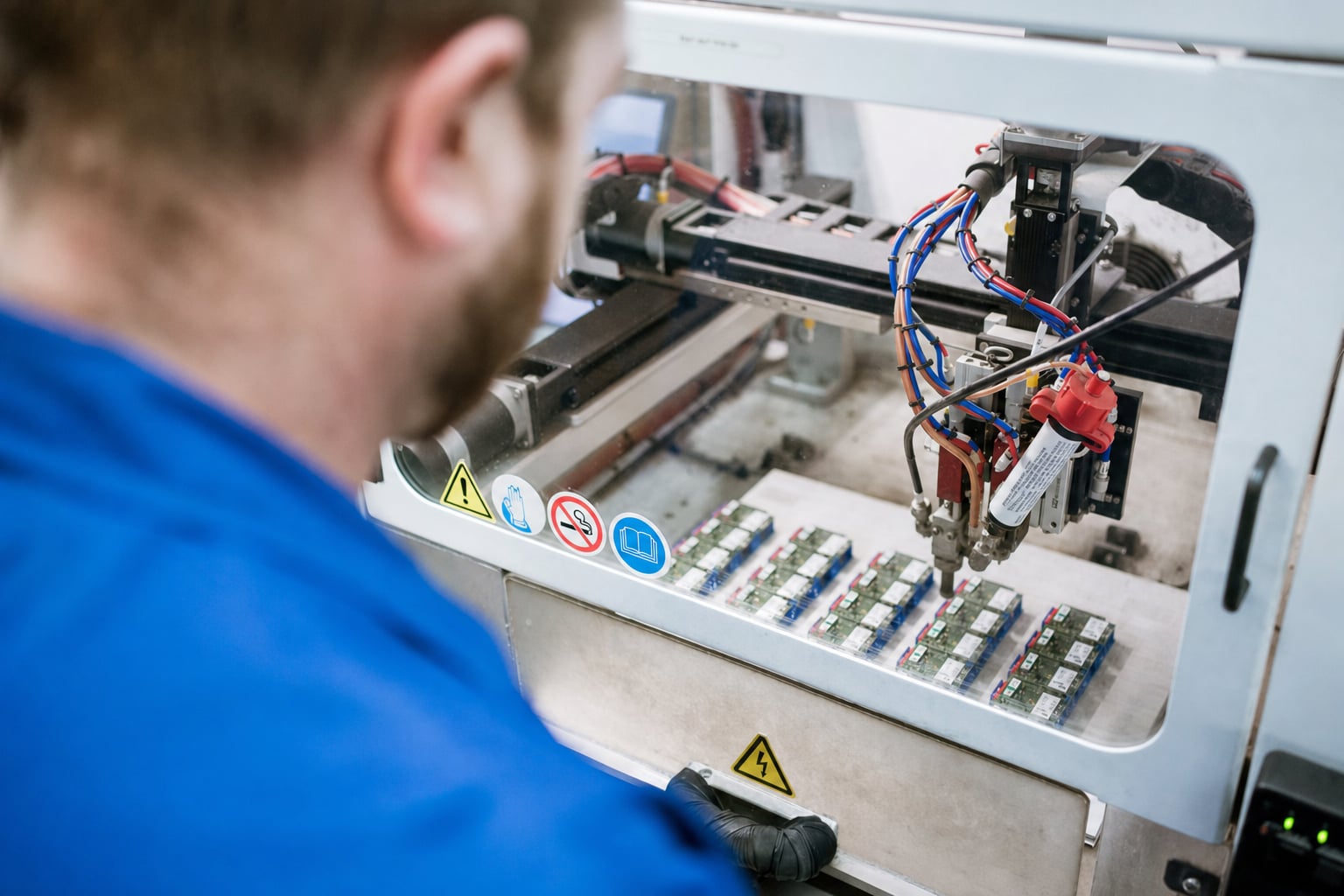
Behind the scenes, there is a colossal effort in development and continuous improvement; however, investors are not always ready to enter this market which requires significant resources over long periods.
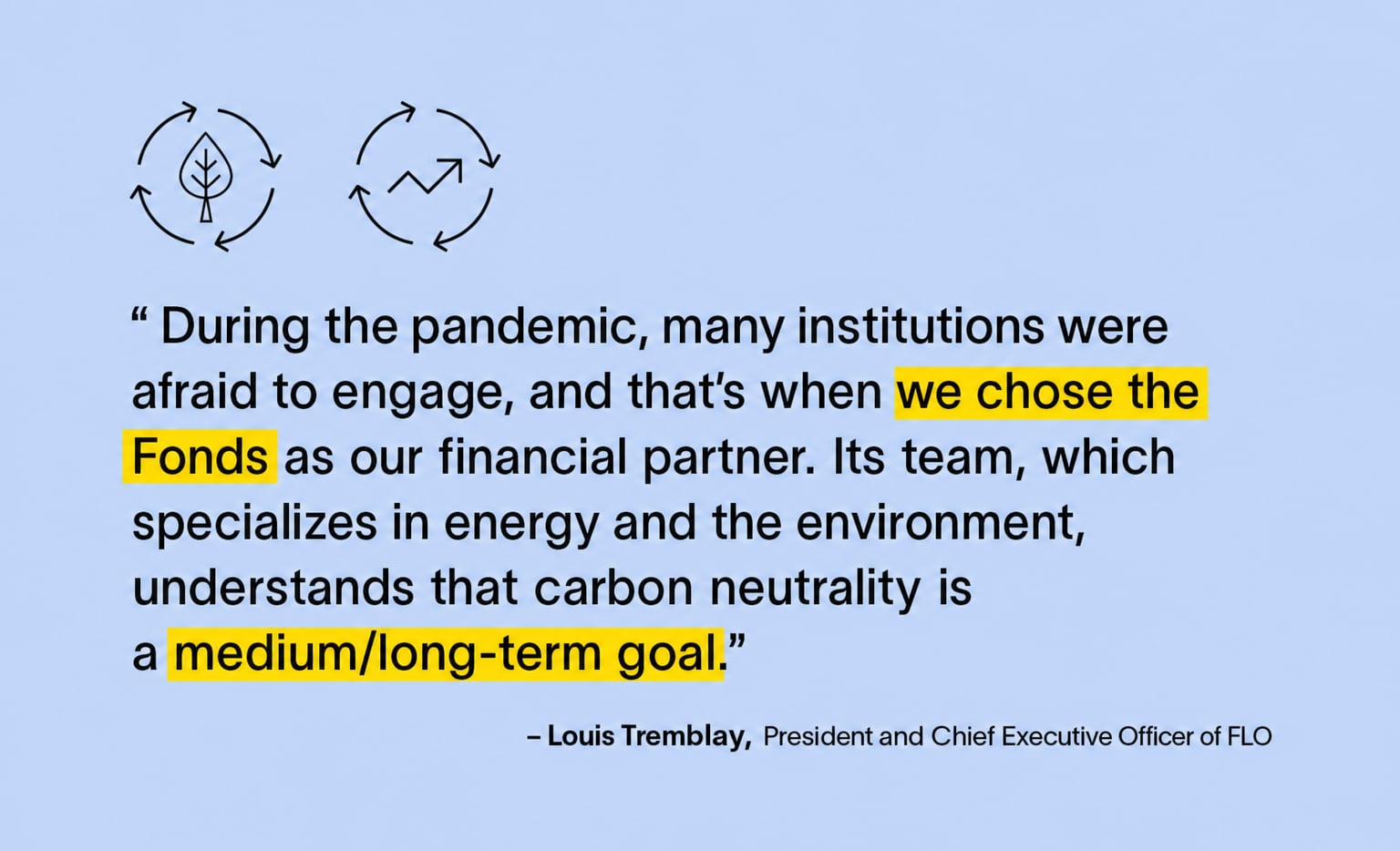
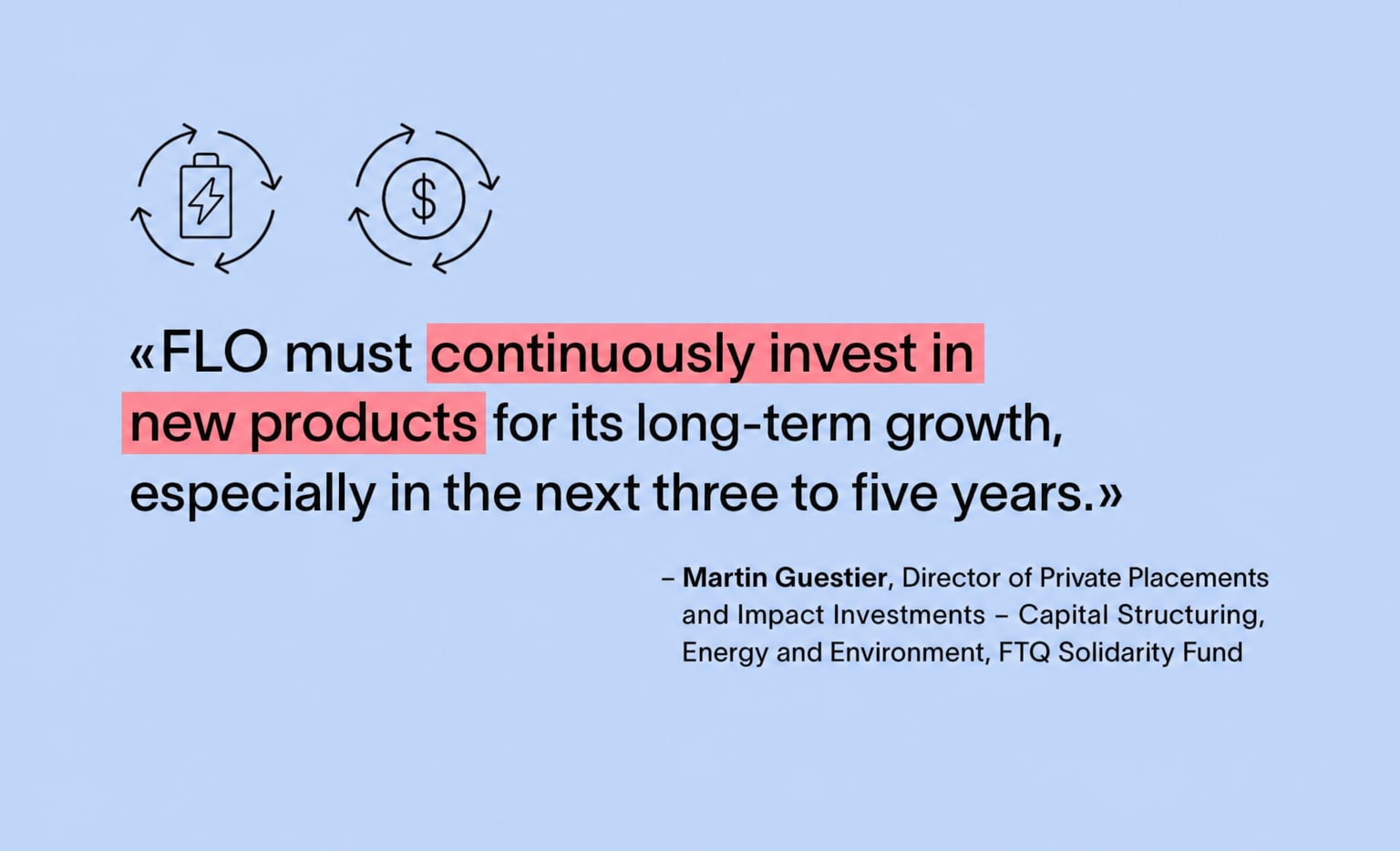
"Environmental technologies are a high-velocity market, evolving alongside legislation and demand for high-performing, robust products. It's therefore important that investors understand the industry, but also the issues in order to project themselves into the future. The Fonds de solidarité FTQ has a team specialized in energy and the environment, capable of aligning with entrepreneurs' vision," says Martin Guestier, director of private investments and impact investments at the Fund.
A patient and present partner
This corresponds to the Fund's philosophy, a patient institution that reinvests in its partner companies with a long-term growth perspective. It is also a deep-pocketed investor, with more than $17 billion in net assets, replenished year after year by the contributions of its shareholder-savers. Moreover, over the past five years, it has invested an average of $1.3 billion annually in local companies.
The Fund has set a goal of holding $12 billion in net assets by 2027 in sustainable development. This will allow it to create business synergies between different players in the sector and to contribute to the energy transition and the electrification of transportation.
"We've been talking about sustainable development for 40 years, but it's really now that we're experiencing momentum for climate technologies," says Martin Guestier. "We are building an industry of the future, which is nothing less than the infrastructure of tomorrow's economy."
For more information on the Fonds de solidarité FTQ's financing offerings, visit fondsftq.com/entreprise


