


After a goodplanning your electrification project school bus fleet andchosing your suppliersNow is the time to set up your pilot project. The gradual integration of electric vehicles considerably reduces operational risks, enabling you to identify and correct transition-related issues as they arise, without affecting your services. In this way, you can gradually familiarize yourself with the new technologies associated with electric vehicles, recharging systems and the various after-sales services associated with them. Find out how to plan your pilot project in this blog post.
Implementing a pilot project and gradually integrating electric vehicles is a key step in your school bus fleet electrification project. It enables you to identify the best operating practices for your needs, in terms of the distances to be covered, the climatic conditions in which your buses operate, the types of roads used, and so on. Following this first sentence, we recommend that you carry out a retrospective analysis to identify areas for improvement when integrating future electric buses. This analysis should be carried out six to ten months after the electric buses go into service, and should include a period of winter use to validate all system elements under extreme conditions of use, and to develop recommendations for future deployments.
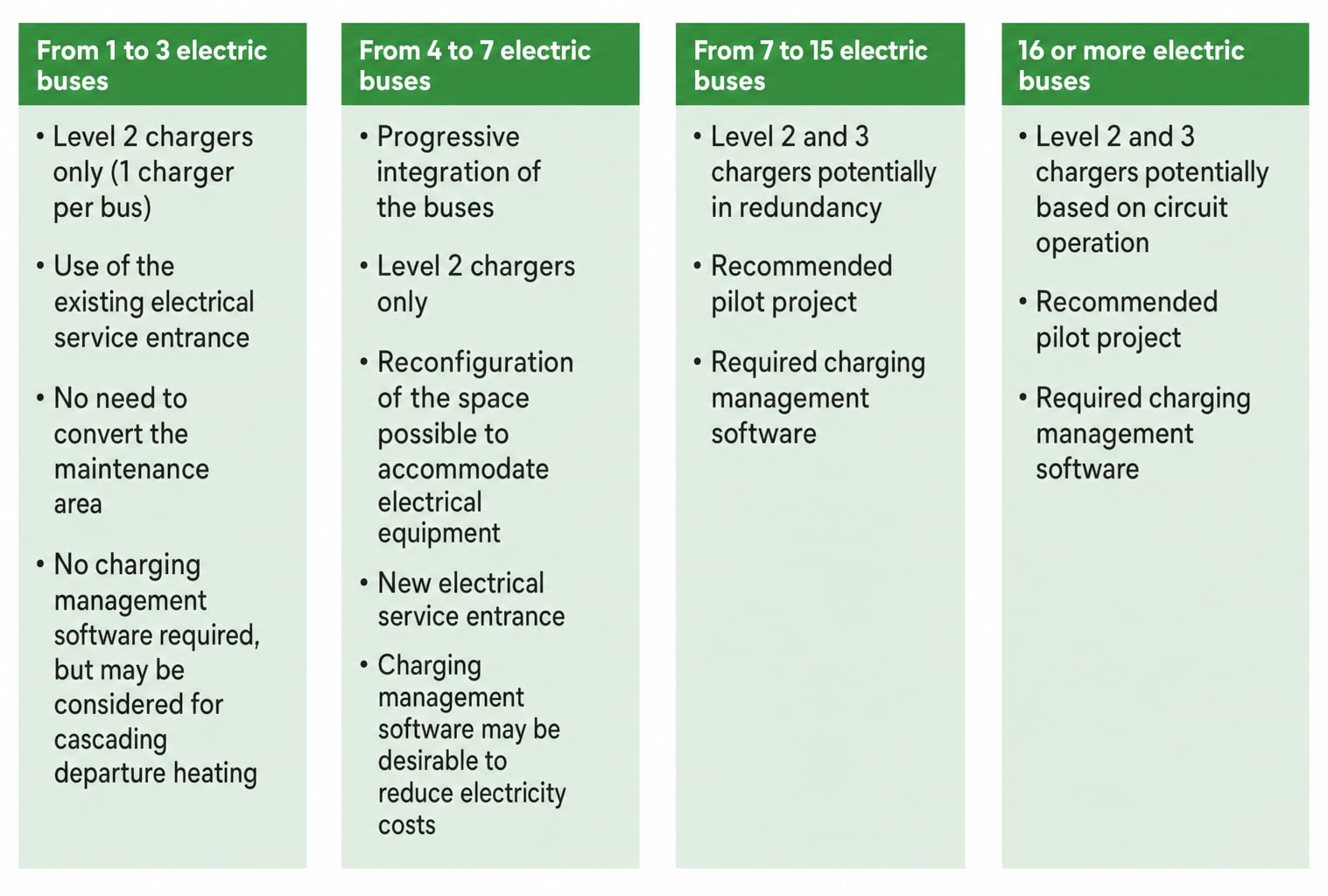
If you have a fleet of more than ten vehicles, a pilot project replacing 10% to 15% of your fleet with electric buses will enable you to achieve the above objectives. If you have a fleet of fewer than ten vehicles, we recommend a phased approach to vehicle integration, starting with one or two electric buses and their charging equipment in the first phase.
For more information, seeWeb page and theguide Carrier+.
This project was made possible thanks to the financial support of the Quebec government, the Fondation Familiale Trottier, the Fonds Climat du Grand Montréal and the Fonds de solidarité FTQ. Propulsion Québec would also like to thank L'Accélérateur de transition and the team at WSP Canada for their essential contributions, as well as all the experts we met during the preparation of this guide.


