


ZERO-EMISSION VEHICLE STANDARD
Montreal, March 17, 2026— Propulsion Québec and Electric Mobility Canada (EMC) wish to reiterate the importance of maintaining an ambitious zero-emission vehicle (ZEV) standard in Quebec. As this policy is, once again, the subject of debate, it is important to put certain elements into perspective.
A policy adopted by consensus
The ZEV standard is not a recent policy. It was adopted in 1990 in California and in 2016 in Quebec as part of Bill 104 and received the unanimous support of the political parties represented in the National Assembly[1]. The standard was implemented gradually starting with the 2018 model year in order to increase the availability of electric vehicles (EVs) for Quebec consumers.
However, the number of electric vehicles (EVs) in Quebec has increased sharply since then, rising from 66,639 EVs on the roads in December 2019[2] to nearly 440,554 in December 2025[3]. Quebec, where nearly 50% of the country's total electric vehicles are in circulation[4], is today the most advanced province in transport electrification.
A realistic policy
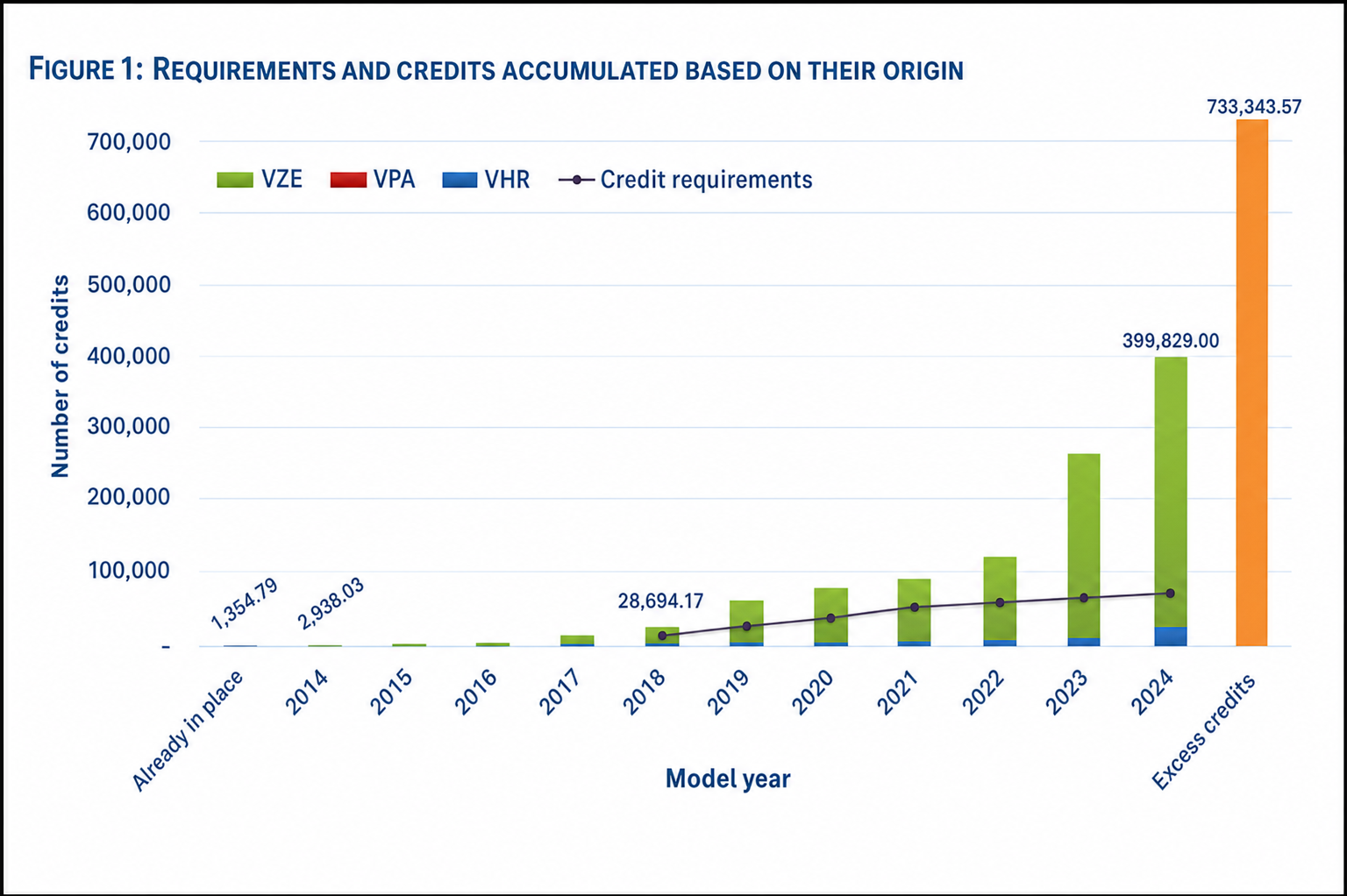
The most recent data show that automakers have largely met the standard's targets. According to the report published in March 2026, the industry has accumulated nearly 735,000 surplus credits since the standard came into force, i.e., more than triple the credits required to meet the regulatory requirements set for that period[5].
This significant surplus will have the effect of reducing credit requirements by about 20% for the 2025-2027 compliance period and could lead to a reduction of about 15% for the 2028-2030 period. These results demonstrate that the standard is not only achievable, but that it has been widely exceeded by industry[6].
A debate that must be put back into context
Some suggest today that the ZEV standard should be questioned on the grounds that the federal government has abandoned similar policies or that the market context is less favorable. However, it is important to recall that the Quebec standard was adopted well before the federal government's intervention and that, since then, transport electrification has become a strategic direction in Canada. The federal government recently adopted an industrial strategy to support the electric vehicle sector and plans to strengthen greenhouse gas reduction standards for light-duty vehicles, with the goal of achieving an electric vehicle adoption rate of 90% by 2040[7]. In addition, purchase incentives for electric vehicles will be reinstated for the next 5 years.
Maintaining an ambitious ZEV standard will not only allow Quebec households to fully benefit from federal programs aimed at purchasing electric vehicles, but also ensure that Quebec remains a priority market for the arrival of new models. In other words, Quebec has every interest in not leaving these resources on the table.
Economic benefits for consumers
Electric vehicles also reduce costs for Quebec households. Several analyses show that the total cost of ownership (TCO) of an electric vehicle can be significantly lower than that of a comparable gasoline vehicle. For example, an analysis by Propulsion Québec shows that an electric SUV can allow households to save nearly 20% of total costs compared to an equivalent gasoline model[8].
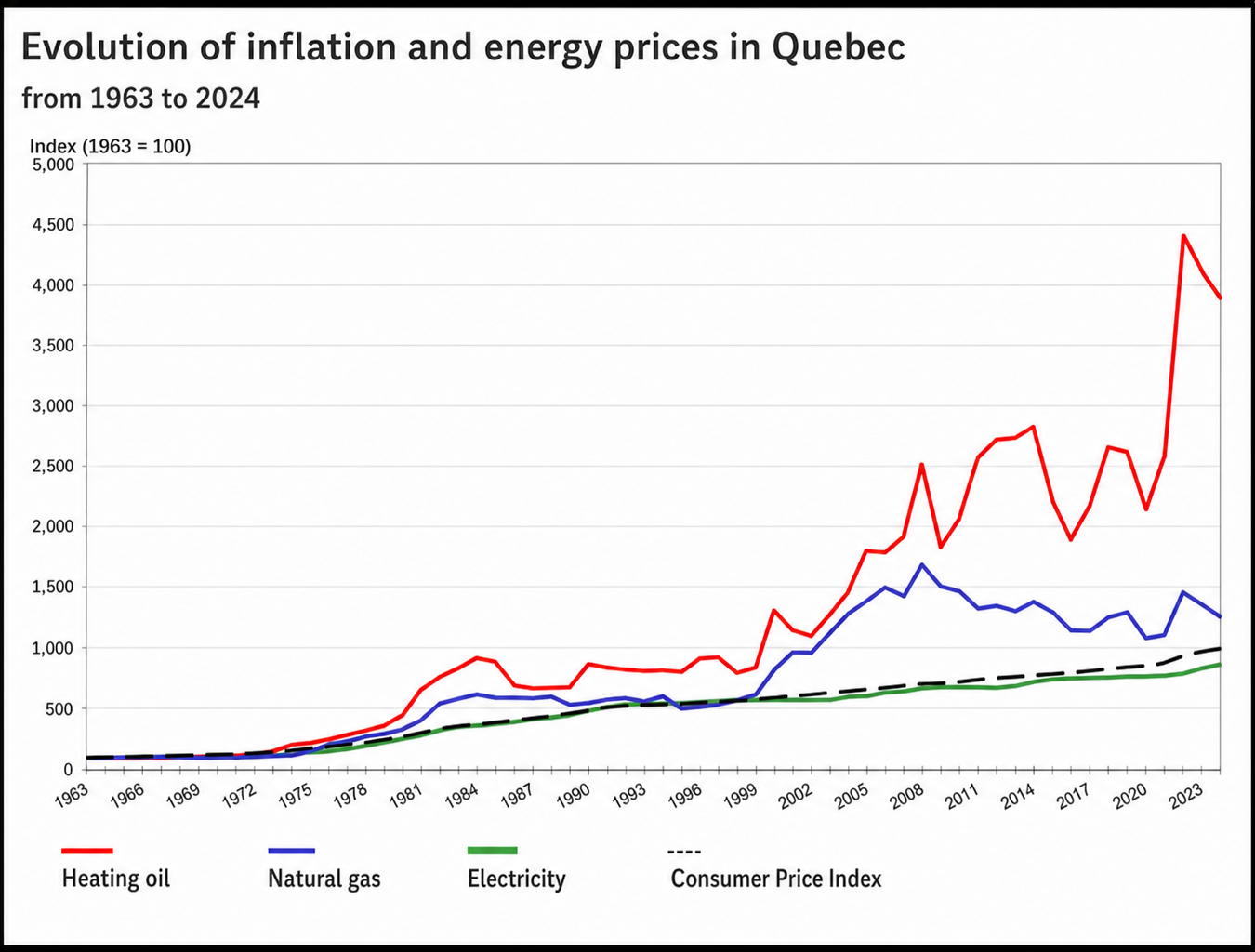
Over the past 25 years, the price of gasoline has increased nearly three times faster than that of electricity. Unlike fuel, the price of electricity remains both reasonable and predictable, despite the significant growth of the electric vehicle fleet in Quebec[9].
Furthermore, according to Electric Mobility Canada, nearly forty models of electric and plug-in hybrid vehicles are now offered at a sale price below the average selling price of a new vehicle in Quebec in Q4 2025[10].
It is becoming increasingly relevant to enable Quebec households to have access to less costly mobility solutions that are less dependent on an energy model based on gasoline.
An economic lever for Quebec
Beyond the benefits for consumers, transport electrification also represents an economic advantage for Quebec. In a global context marked by oil price volatility and geopolitical tensions, reducing dependence on imported hydrocarbons is an important economic and energy issue. The oil consumed in Quebec is largely imported, whereas electricity is produced locally from renewable resources.
By promoting transport electrification, Quebec leverages its hydroelectric wealth, reduces its dependence on international oil markets, and reinvests those revenues in its public services and economy. Recall that with a price per litre approaching $1.90 on this March 17, 2026[11], it costs more than $1 billion per month (before taxes) to import fuel for road vehicles in Quebec given the number of litres sold[12]. This capital flight deserves to be taken seriously.
Some concerns have been raised about the impact of electric vehicles on the power grid. However, analyses must take into account the smart charging solutions already deployed. For example, smart and bidirectional charging not only optimizes the timing of charging, but also makes it possible to feed energy stored in vehicle batteries back into the power grid when demand is high. This capability can help better manage consumption peaks and support grid stability. From this perspective, Quebec would benefit from putting in place a favorable regulatory framework to enable the deployment of these solutions and maximize the benefits of electric vehicles for the grid. The challenge is not the energy available, but the management of peaks — a challenge that smart charging can meet.
Staying the course
The ZEV standard is not a constraint for the market. Rather, it offers a predictable framework that allows consumers to access an alternative that is more energy-efficient and economically advantageous compared to gasoline vehicles.
“ The ZEV standard helps make Quebec a leader in transport electrification, while strengthening its economic prosperity and energy sovereignty. As Quebec's budget will be presented tomorrow, we wish to remind that the ZEV standard remains a proven tool that carries significant benefits for Quebec, while ensuring sound management of public funds since it is a non-financial measure. We reiterate the importance for public decision-makers to stay the course and to continue efforts to support the transition to decarbonized mobility for the benefit of Quebec and Quebecers ”.
— Alexis Laprés-Paradis, CEO of Propulsion Québec.
“Quebec has been a North American leader in transport electrification for nearly 15 years. Trying to eliminate the ZEV standard would mean we would backtrack significantly and increase our economic and geopolitical dependence on oil, whose major negative ecological and health impacts are well documented.”
— Daniel Breton, CEO of Electric Mobility Canada
Contact person

Marie-Josée Côté
Director, public and government affairs

Anna Schuett
Mobilité Électrique Canada | Directrice des communications


