


As part of its Demonstration and Experimentation initiative, Propulsion Québec will hold the Forum "Crossed Perspectives: Autonomous Shuttles in Quebec" in a virtual format on September 9 and 10. Presented as six conferences, this forum aims to provide a retrospective on autonomous shuttle projects that took place in Quebec in 2018–2019 and to share the lessons learned from these experiences.
In anticipation of this event, we offer a quick overview of autonomous shuttles to demystify this new form of technology that will certainly have a major influence on future mobility.
What is an autonomous shuttle?
Autonomous shuttles are vehicles that operate autonomously at speeds under 50 km/h on learned and pre-established routes[1]. The level of autonomy of vehicles can vary, but essentially the new autonomous shuttle projects have no driver or a driver who performs very few actions. In other words, it’s the brand-new evolution of the autopilot!
For our ecosystem, autonomous vehicles represent one of the technological innovations with the potential to profoundly change tomorrow’s transport and mobility. To avoid congestion problems associated with population growth and urbanization, cities must reinvent themselves and create mobility systems that include shared light- and medium-weight vehicles. Autonomous shuttles are part of this solution and can become a complement to traditional modes of transport such as city buses or light rail. They are often described as a "last-mile" solution in urban areas, or in lower-density zones. Thus, they become a very interesting option to ensure movement within industrial campuses, urban centers, or suburban neighborhoods, which greatly improves collective mobility.
Several companies have entered this grand adventure and already offer several models of autonomous shuttles. Notable among them are:Aurrigo, Coast Autonomous, Easy Mile, Fusion Processing, Local Motors, May Mobility, NAVYA, Optimus Ride, Ohmio, and 2 Get There.
The technology and its advantages
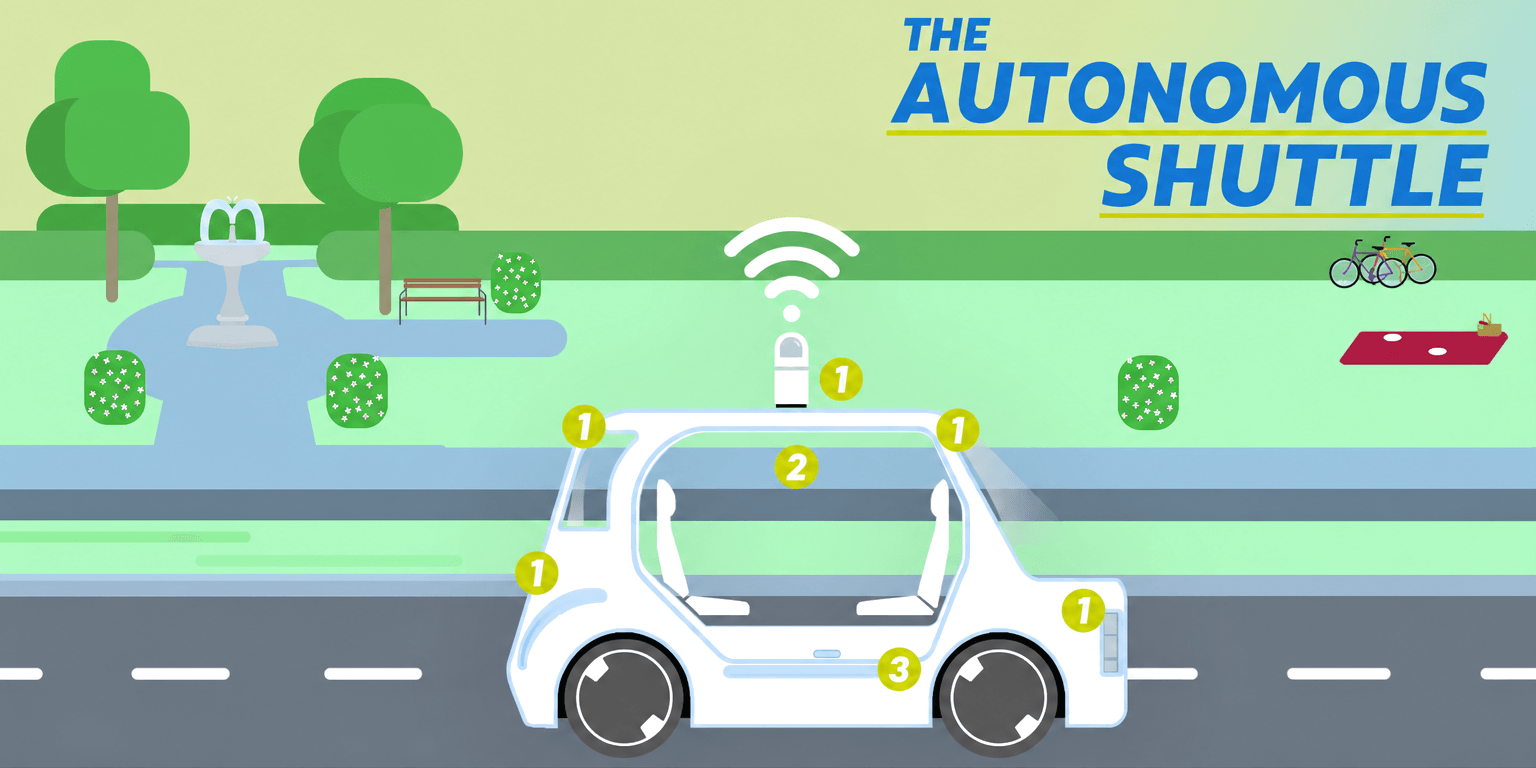
- Some sensors can give the vehicle a 360-degree view of its environment.
- A navigation system high-performance uses, among other things, artificial intelligence to calculate its movements and assess risks, allowing it to maneuver safely in traffic.
- The majority of autonomous shuttles use an electric propulsion, a clean energy reducing GHG emissions.
Autonomous shuttles present several significant advantages for sustainable mobility. They notably have the potential to:
- Reduce the number of cars on the roads
- Reduce the number of road accidents
- Reduce congestion
- Reduce parking problems
- Increase the use of public transportation
- Increase accessibility for people with disabilities or without a driver's license
- Decrease GHG emissions and noise pollution, because the vehicles are electric and shared
Various uses around the world
In recent years, trials have multiplied and several projects have emerged around the world. Although passenger transport remains the predominant use for this type of vehicle, other uses, such as the transport of goods and equipment, have also been observed. Here is an overview of several notable projects:
Candiac | NAVYA electric autonomous shuttle pilot project
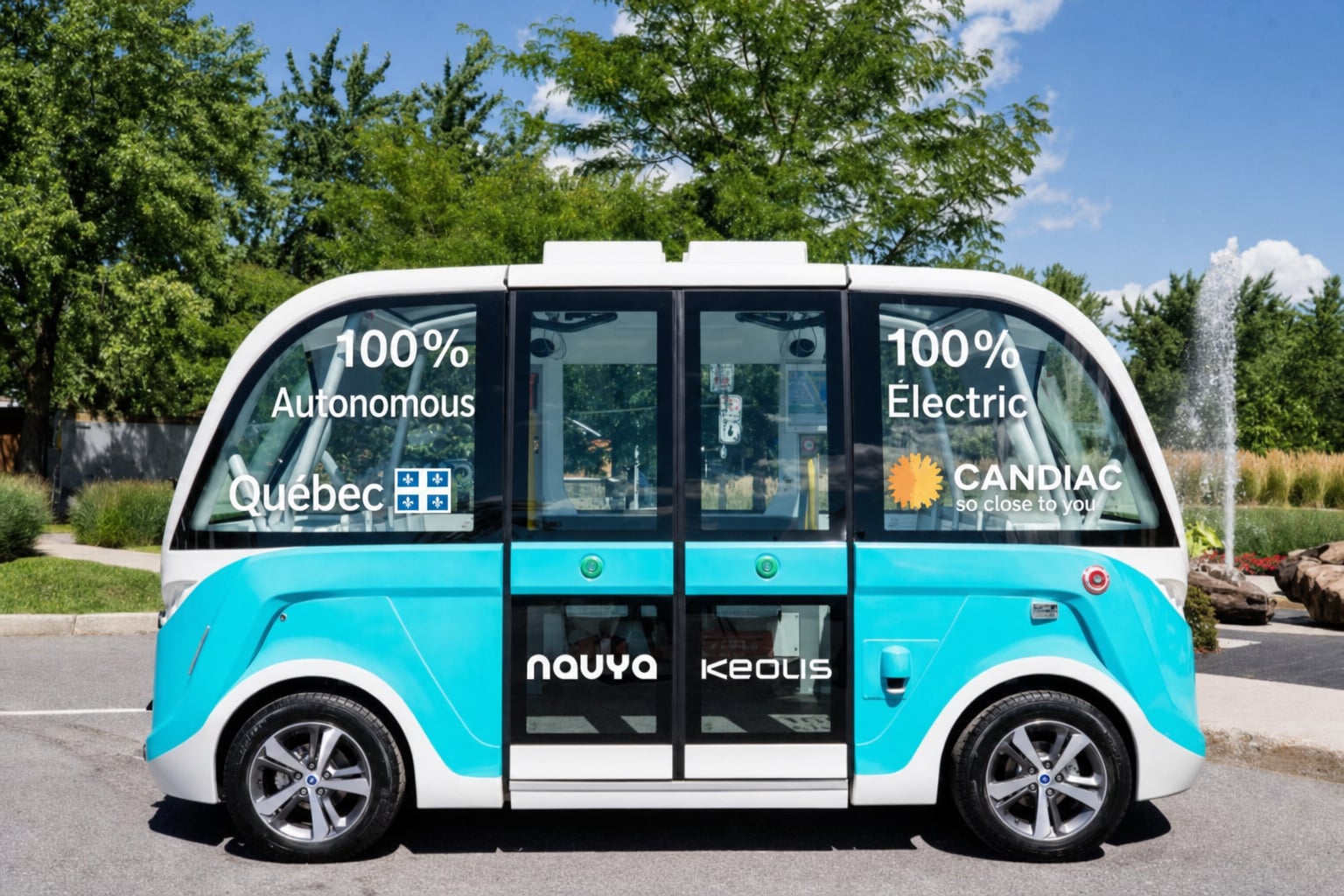
In August 2018, Keolis Canada and the City of Candiac launched the first long-term demonstration project of a 100% electric autonomous shuttle on public roads in Canada. With a capacity of 15 passengers and an operating speed of about 25 km/h, the NAVYA shuttle traveled a 2 km route in mixed traffic, including an intersection equipped with a smart traffic light provided by Orange Traffic, a Quebec company.
New York | Demonstration of a Coast Autonomous autonomous shuttle at Times Square
In the summer of 2018, Coast Autonomous's driverless P-1 shuttle ran a route normally reserved for pedestrians on Broadway in New York City, much to the delight of passersby, giving high visibility to this new type of technology. Citizens and the media were able to board and try out this promising form of transport.
Jacksonville | An autonomous shuttle delivers COVID-19 tests in Florida
In response to the COVID-19 health crisis, the Mayo Clinic in Florida uses four NAVYA driverless shuttles to transport medical supplies and COVID-19 test samples. They run from an outdoor testing site to a nearby laboratory, which therefore reduces the risk of virus spread since there is no driver on board the shuttle.
California | Robots make home deliveries
Imagine receiving your groceries at home thanks to a robot! Since 2018, that's what NURO, a California-based company, has offered; it aims to develop urban delivery using small electric autonomous vehicles, a fast, safe, and economical solution.
The autonomous shuttle industry in Quebec
Several of Propulsion Québec's members are involved, directly or indirectly, in the design and operation of autonomous shuttles. To learn more about their expertise in the field, we invite you to visit their various websites:
- Leddartech : LiDAR Technology
- Keolis : Operator
- Transdev : Operator
- Orange Traffic : Smart traffic light
This blog article is made possible thanks to our major partner the Montreal Urban Innovation Lab.
[1] According to the definition of our member LeddarTech.


